
Great Reef Census – Community-Powered Coral Reef Monitoring

Project Overview:

The Great Reef Census (GRC) is a global citizen science project where people of all ages can help scientists understand and protect the Great Barrier Reef. Volunteers analyze real reef images online, and every classification helps train and improve an AI model that maps coral cover, coral types, and areas of reef degradation.

Participants learn how to recognize key coral groups, branching, plating, and boulder corals, because these species are strong indicators of reef health. You’ll also help identify whether corals are soft, hard, or a mix of both, which allows scientists to estimate overall hard coral cover for each reef.

By analyzing images, volunteers directly contribute to filling critical data gaps, validating AI outputs, and producing near-real-time insights that support reef conservation and restoration. Whether you’re a student, a family, or a curious ocean lover, your clicks help power the science that helps protect the Reef.

Program Partners

  • Citizens of the Reef
  • University of Queensland
  • Cotton On Foundation
  • Prior Family Foundation
  • Queensland Parks and Wildlife

Location

Expected Time Frame

Duration of Expedition

  • 7 Days

Citizen Science activity parameters listed above are flexible and negotiable.

Citizens of the reef CS (1) (1) (1)

Background:

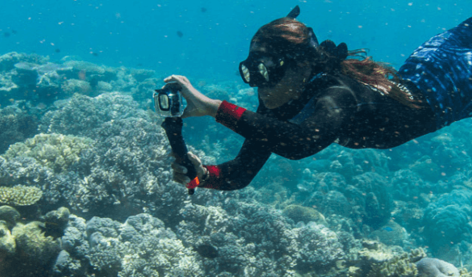
Since 2019, the Great Reef Census has created a simple photo protocol that snorkelers or divers can use to help record what the reef looks like. Scientists have tested this method in a study published in 2025 (Lawson et al.) and found that when volunteers work together with AI, the results are as reliable as expert coral assessments.

Over the past five years, volunteers and partners have collected more than 170,000 reef photos from 740 different reefs on the Great Barrier Reef. This information has helped guide responses to Crown-of-Thorns Starfish outbreaks, identify important “source reefs” that help the reef recover, and support Traditional Owner monitoring and restoration work.

The same approach has also been tested in Hawai‘i, and a new pilot is starting in the Red Sea, showing that this simple, citizen-powered method can work around the world.

Mission:

To deliver rapid, affordable, and manager-relevant reef reconnaissance data to prioritise conservation and restoration actions while building local capacity through community-led in-water surveys and virtual volunteering.

Objectives:
• Collect standardized reefscape imagery across priority reefs to fill spatial data gaps for resilience and connectivity modelling.
• Validate and refine AI segmentation (hard coral / soft coral / rubble detection) using expert analyses and locally collected datasets.
• Provide near–real-time reconnaissance products (coral cover, dominant coral types, rubble probability maps) to marine managers and partners.
• Engage and train local operators, Traditional Owners, and corporate or recreational volunteers in survey methods and analysis workflows.
• Share datasets openly (where permissions allow) to support research, management, and local stewardship.
The Great Reef Census delivers actionable data to reef managers, supporting:
• Prioritisation for COTS control and restoration efforts.
• Resilience and connectivity modelling to identify key reefs for conservation and restoration.
• Mapping of degraded and rubble-dominated zones to guide targeted interventions.
• Capacity building: community participation, skill sharing, and enhanced local stewardship.

Data Impact:

The Great Reef Census (GRC) generates large-scale, standardized reef imagery that is analyzed by community volunteers and artificial intelligence to produce timely, spatially extensive coral reef condition data. This approach supplements traditional, expert-led reef monitoring by enabling rapid coverage across hundreds of reefs that would otherwise be costly or logistically difficult to survey.

Volunteer classifications are used to validate and improve AI models that map hard and soft coral cover, dominant coral growth forms, and rubble-dominated areas. The resulting datasets help fill critical spatial and temporal data gaps, allowing scientists and managers to better understand reef health, detect degradation, and track recovery over time.

Relevant/Previous Scientific Publication(s):

  • Lawson, C. L., Chartrand, K. M., Roelfsema, C. M., Kolluru, A., & Mumby, P. J. (2025). Broadscale reconnaissance of coral reefs from citizen science and deep learning. Environmental Monitoring and Assessment, 197(7), 1-21.

How to Participate:

If you would like to support the Great Reef Census, email SeaKeepers’ South Pacific Director, Melissa White, at melissa@seakeepers.org to sign up and receive details on how to take part in in-water surveys, contribute images from your vessel, or join the virtual analysis effort.

Get Involved

If you’re interested in learning more about this specific program opportunity, please reach out to our team below to find out more about this program or get involved in other opportunities with SeaKeepers.

Explore More Opportunities

img at sea opportunities

At-Sea Opportunities

Browse other research opportunities around the world to support oceanographic research through our other branches of programming.
img citizen science opportunities

Citizen Science Opportunities

Browse other citizen science opportunities around the world to support scientists in their research.
img education opportunities

Education Opportunities

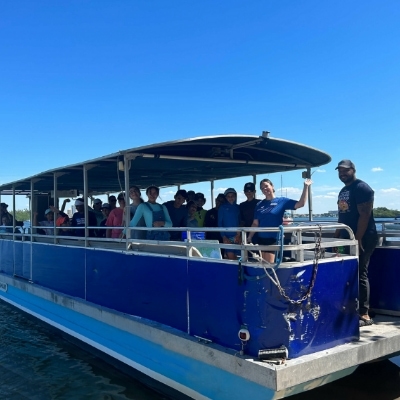
Browse education opportunities in South Florida, the United Kingdom and the South Pacific to support educational outreach for students.
img community opportunities

Community Opportunities

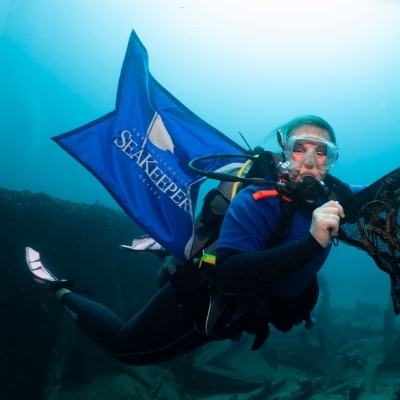
Browse community engagement opportunities in South Florida, the United Kingdom and the South Pacific to support local social responsibility and policy change.
img get involved form

Get Involved

To discover more about this program and contribute to the crucial work of ocean conservation and scientific research, please fill out the form below and a member of our programming team will reach out to you with more details.

"*" indicates required fields

This field is for validation purposes and should be left unchanged.