
Great Reef Census – Large-Scale Coral Reef Monitoring

Project Overview:

The Great Reef Census (GRC) is a large-scale citizen science reconnaissance program that combines in-water seascape image collection with AI-assisted analysis and a global virtual volunteering workforce to rapidly map coral cover, dominant coral types, and degraded reef areas. This program opportunity seeks vessel days within the Great Barrier Reef Marine Park to collect standardized reefscape imagery across priority reef systems. The resulting data will fill critical spatial gaps, validate AI models, and deliver near-real-time, manager-relevant products to support conservation and restoration decision-making.

Program Partners

  • Citizens of the Reef
  • University of Queensland
  • Cotton On Foundation
  • Prior Family Foundation
  • Queensland Parks and Wildlife

Location

Expected Time Frame

Duration of Expedition

  • Minimum of 3 days, ideally 7 days

Accommodation Needed

  • 2 minimum

Special Equipment Needed

  • Access to a tender or smaller vessel for in-water survey deployment - Minimal deck space required

Expedition parameters listed above are flexible and negotiable.

Citizens of the reef SLE (1) (2) (1)

Background:

Since 2019, the Great Reef Census has developed and validated a simple, replicable seascape photo protocol suitable for both snorkelers and divers. Peer-reviewed validation published in 2025 (Lawson et al.) demonstrates that a hybrid AI and virtual volunteer workflow delivers benthic cover estimates comparable to expert analysis.

Over five years, the Census has captured more than 170,000 images across 740 reefs on the Great Barrier Reef, informing Crown-of-Thorns Starfish (COTS) prioritisation, identifying key source reefs, and supporting Traditional Owner monitoring and restoration planning. Recent pilots in Hawai‘i and an upcoming pilot in the Red Sea demonstrate the global adaptability of this approach.

The Great Reef Census collects reef imagery using crowd-sourced vessels to support in-water surveys conducted by divers and snorkellers, coupled with a global online Photo ID task force that classifies coral imagery using artificial intelligence. Images captured in the field are uploaded and analysed through AI models, supported by expert validation, to rapidly and consistently estimate coral cover, reef condition, and change over time.

This highly scalable combination of people-power, marine science, and technology enables large volumes of reef data to be processed at record speed, providing reef managers with timely, decision-ready information. By integrating AI, marine science, and citizen participation, the Great Reef Census is building one of the largest reef image datasets in the world, a proven model now being rolled out globally to support reef protection and management.

Mission:

To deliver rapid, affordable, and manager-relevant reef reconnaissance data to prioritise conservation and restoration actions while building local capacity through community-led in-water surveys and virtual volunteering.

Applications:

Data collected through the Great Reef Census provides reef managers and partner agencies with actionable, near-real-time information to guide conservation and restoration priorities across the Great Barrier Reef. Reconnaissance products generated from standardized imagery including coral cover estimates, dominant coral type distributions, and rubble probability maps directly support operational decisions such as Crown-of-Thorns Starfish (COTS) control targeting, restoration site selection, and the identification of high-value source reefs for resilience and connectivity modelling.

These outputs strengthen reef-scale monitoring and long-term planning frameworks used by the Reef Authority and management partners, shaping restoration priorities and informing resilience-based policy and management decisions. By linking rapid field data with AI-assisted analysis and community validation, the Great Reef Census ensures that science is translated efficiently into practical on-water action.

Relevant/Previous Scientific Publication(s):

  • Lawson, C. L., Chartrand, K. M., Roelfsema, C. M., Kolluru, A., & Mumby, P. J. (2025). Broadscale reconnaissance of coral reefs from citizen science and deep learning. Environmental Monitoring and Assessment, 197(7), 1-21.

Get Involved

If you’re interested in learning more about this specific program opportunity, please reach out to our team below to find out more about this program or get involved in other opportunities with SeaKeepers.

Explore More Opportunities

img at sea opportunities

At-Sea Opportunities

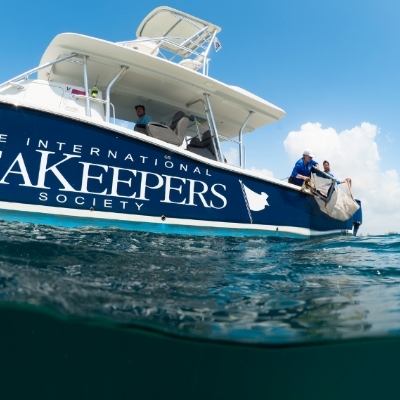
Browse other research opportunities around the world to support oceanographic research through our other branches of programming.
img citizen science opportunities

Citizen Science Opportunities

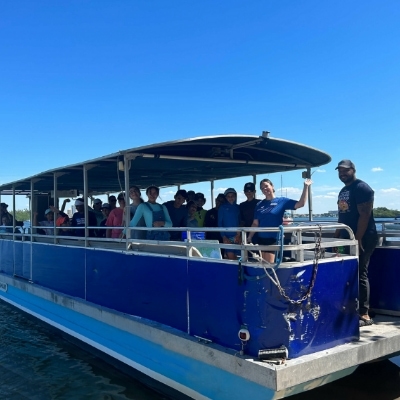
Browse other citizen science opportunities around the world to support scientists in their research.
img education opportunities

Education Opportunities

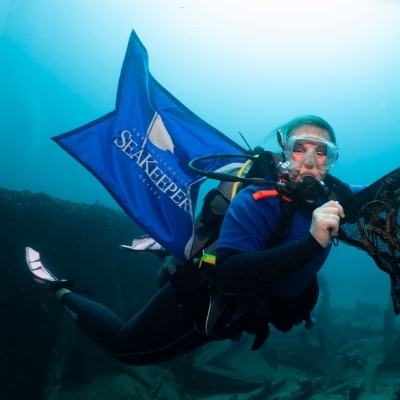
Browse education opportunities in South Florida, the United Kingdom and the South Pacific to support educational outreach for students.
img community opportunities

Community Opportunities

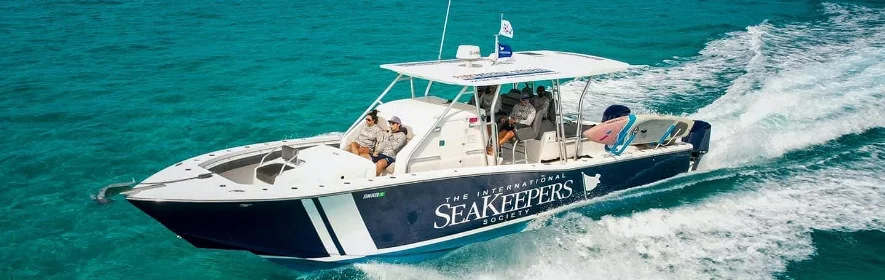
Browse community engagement opportunities in South Florida, the United Kingdom and the South Pacific to support local social responsibility and policy change.
img get involved form

Get Involved

To discover more about this program and contribute to the crucial work of ocean conservation and scientific research, please fill out the form below and a member of our programming team will reach out to you with more details.

"*" indicates required fields

This field is for validation purposes and should be left unchanged.