
Mitigation of Ship Strikes on Large Whales
Project Overview:
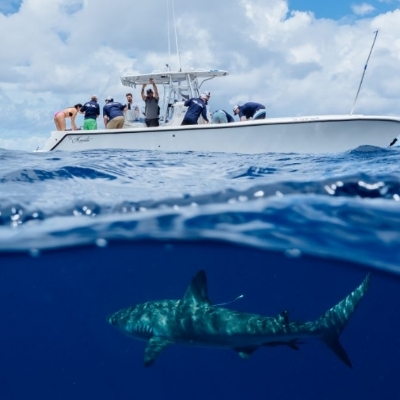
The Mitigation of Ship Strikes on Large Whales project focuses on documenting the presence and distribution of great whales along the west coast of Baja California, Mexico, between Tijuana and Cabo San Lucas – one of the most important seasonal habitats for several large whale species. Through targeted field surveys conducted aboard a supporting vessel, researchers will collect whale sighting data to better understand when and where whales overlap with commercial shipping routes. This information will be used to inform mitigation strategies aimed at reducing the risk of ship strikes, a leading cause of injury and mortality for large whales worldwide.
Program Partners
- Great Whale Conservancy
- Whale Guardians Program
Location
- West Coast of Baja California, Mexico, between Tijuana and Cabo San Lucas
Expected Time Frame
- Between mid-March to mid-April, 2026
Duration of Expedition
- Between 4 to 7 days
Accommodation Needed
- 3-4 Researchers and 1 SeaKeepers Representative
Special Equipment Needed
- A Licensed Captain and access to tender or smaller vessel
Expedition parameters listed above are flexible and negotiable.
Background:
The west coast of Baja California, between Tijuana and Cabo San Lucas, is a globally significant region for large whales, supporting breeding, feeding, and migratory corridors for species including blue, fin, humpback, gray, Bryde’s, minke, and sperm whales. These waters also experience increasing vessel traffic, creating heightened risk of ship strikes – particularly for slow-moving and endangered species.
The project is led by Michael Fishbach, founding director of the Great Whale Conservancy, who has conducted permitted whale research for over 33 years across the Americas. His blue whale research program off Baja California is entering its 32nd consecutive year, making it one of the longest-running datasets of its kind. Data collected through this expedition will build on decades of regional research while addressing the growing need for proactive ship-strike mitigation in Mexican waters.
Mission:
The mission of this project is to reduce overlap between large whales and transiting vessels in Baja California by identifying high-use whale habitats and seasonal patterns. The primary objectives include:
-Conducting vessel-based surveys to document the presence, abundance, and distribution of great whales off Baja California
-Collecting spatial and temporal data that can be integrated into navigational mapping systems used by the commercial shipping industry
-Supporting the development of seasonal routing recommendations that reduce ship traffic through whale-dense areas
-Contributing to long-term recovery efforts for endangered species, including blue whales, by reducing preventable ship-strike mortality
Applications:
Data collected during this Scientist-Led Expedition will be incorporated into specialized software capable of mapping whale sightings directly onto navigational charts used by commercial vessels. These maps allow researchers, Master Mariners, and shipping stakeholders to collaboratively design voluntary and permanent vessel routing measures that minimize collision risk.
In Baja California, this research has the potential to directly inform ship-strike mitigation strategies in a region critical to whale recovery. Findings may be used to support voluntary route adjustments as well as future legislative action aimed at establishing permanent shipping lanes that avoid key whale habitats. Beyond conservation outcomes, reducing ship strikes also supports healthier whale populations that contribute to ocean productivity and sustain the region’s growing whale-watching economy.
Program Partners:
Get Involved
If you’re interested in learning more about this specific program opportunity, please reach out to our team below to find out more about this program or get involved in other opportunities with SeaKeepers.
Explore More Opportunities
At-Sea Opportunities
Citizen Science Opportunities
Education Opportunities