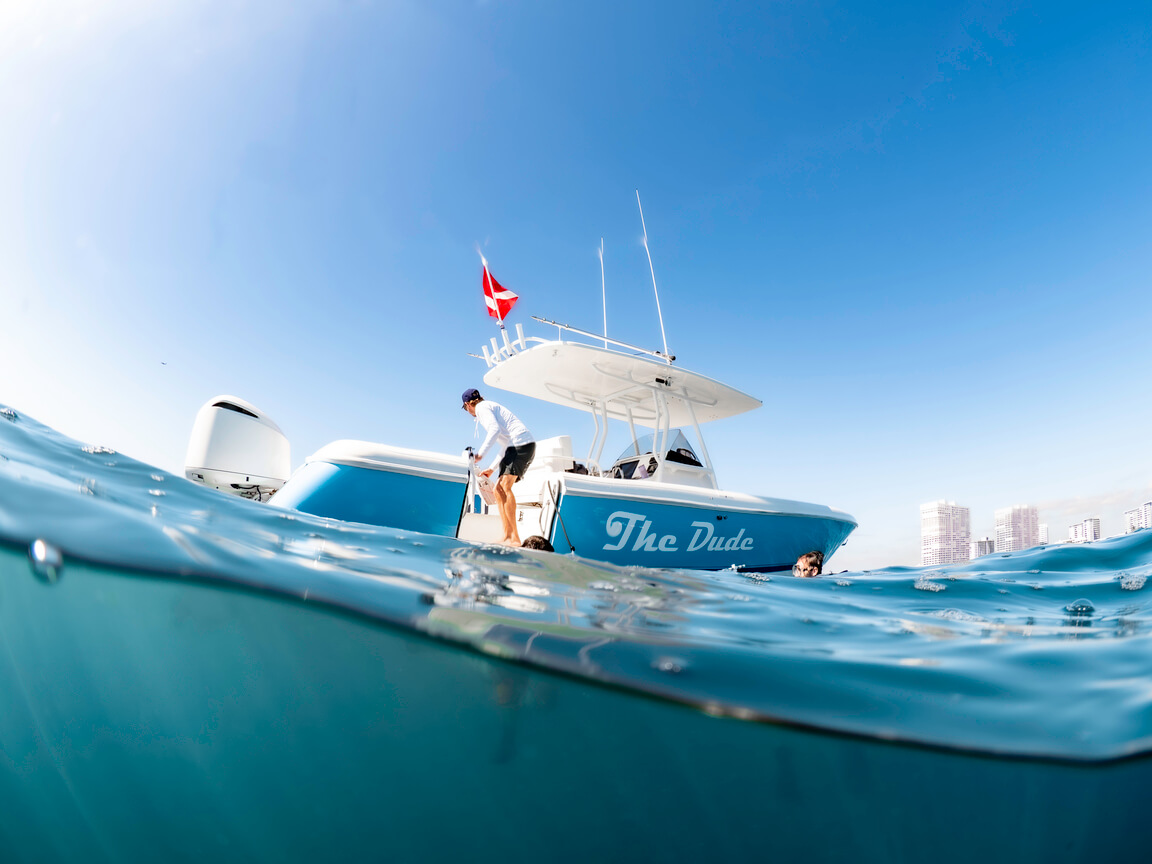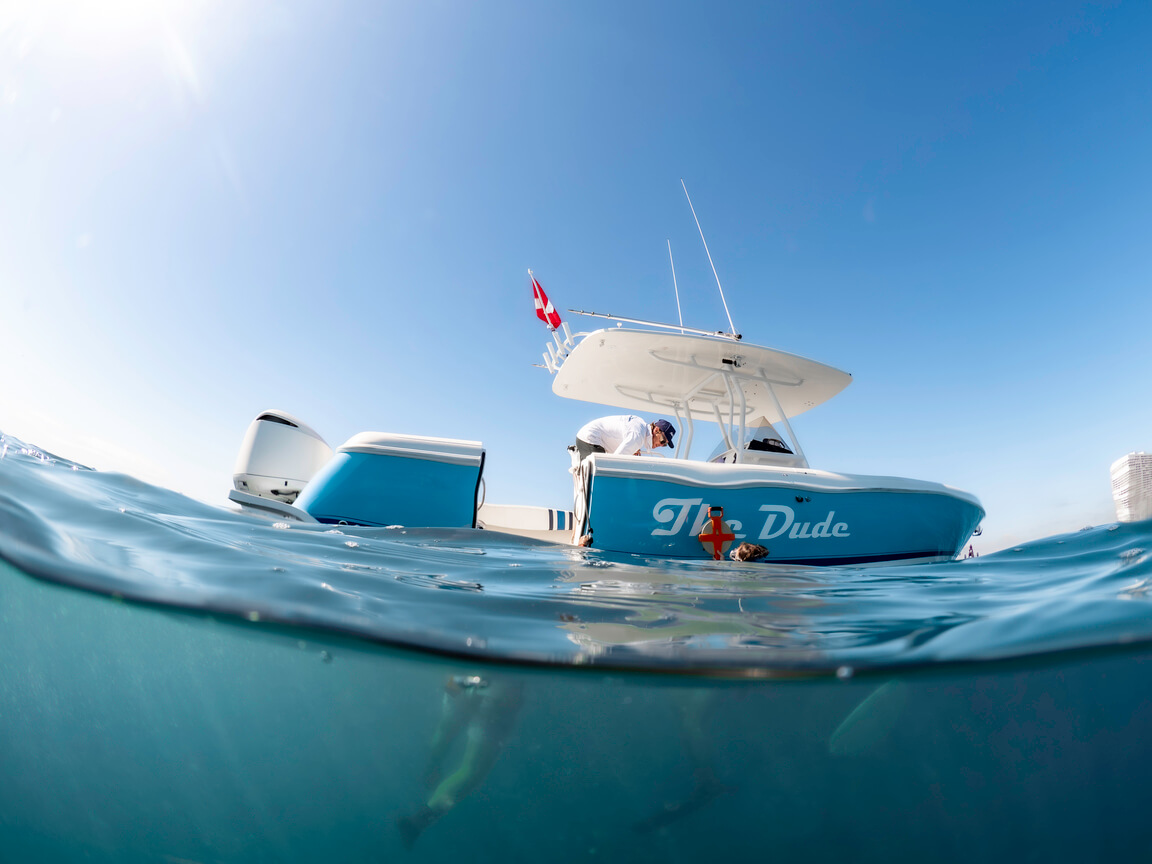

- DISCOVERY Vessel The Dude
Monitoring Corals Near Port Everglades Sand Bypass
- May 16, 2026
- Fort Lauderdale, Florida
Project Overview
The Port Everglades Sand Bypass Project seeks to create a sand trap system to support beach renourishment efforts along Fort Lauderdale’s shoreline by dredging a 10.8-acre basin for sand collection and redistribution. While environmental protection measures have been incorporated into the project design, researchers have observed sediment plumes that may be extending beyond their anticipated footprint and affecting nearby reef habitats.
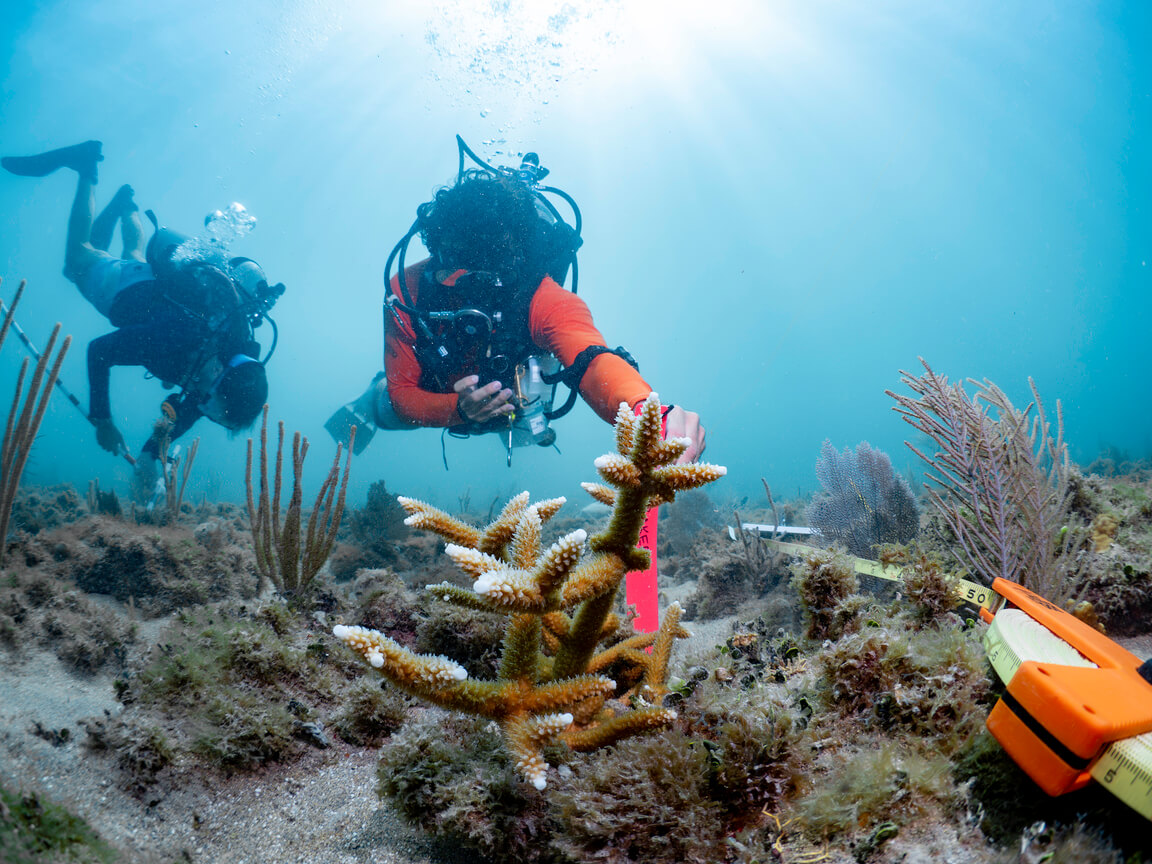
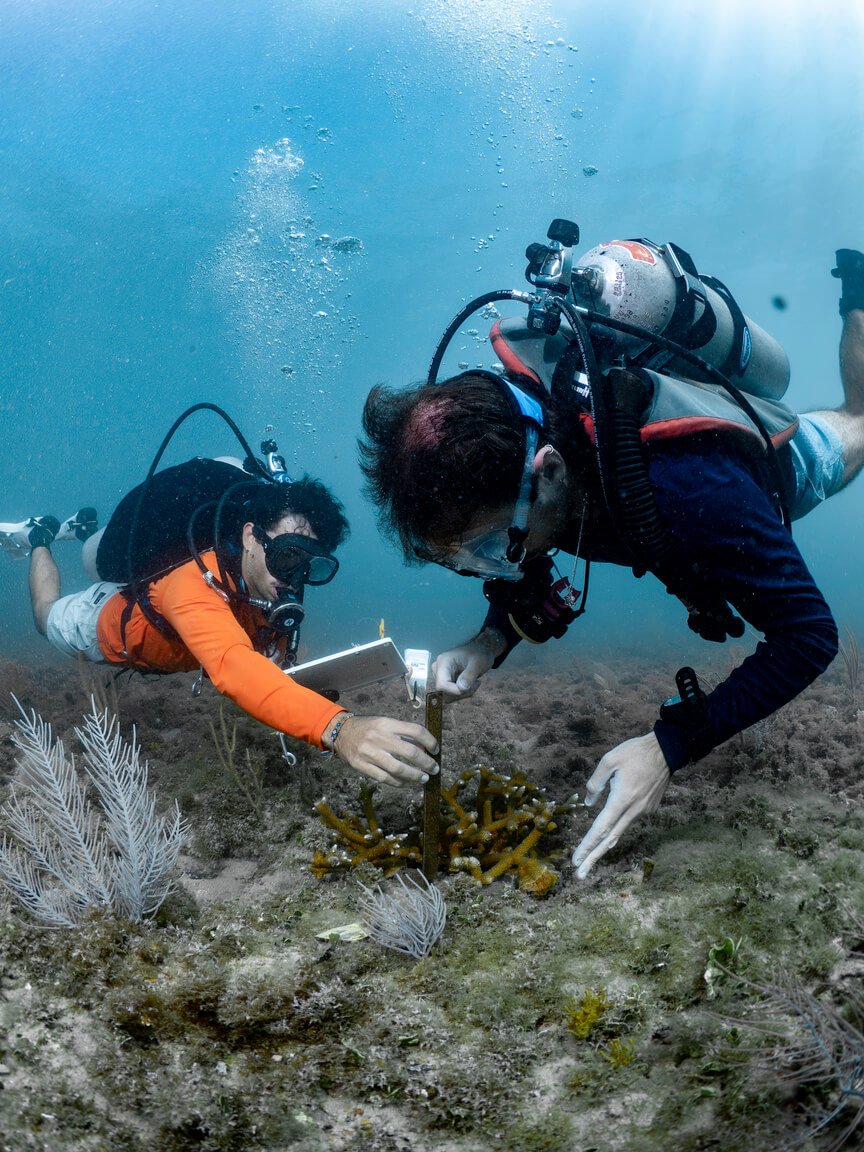
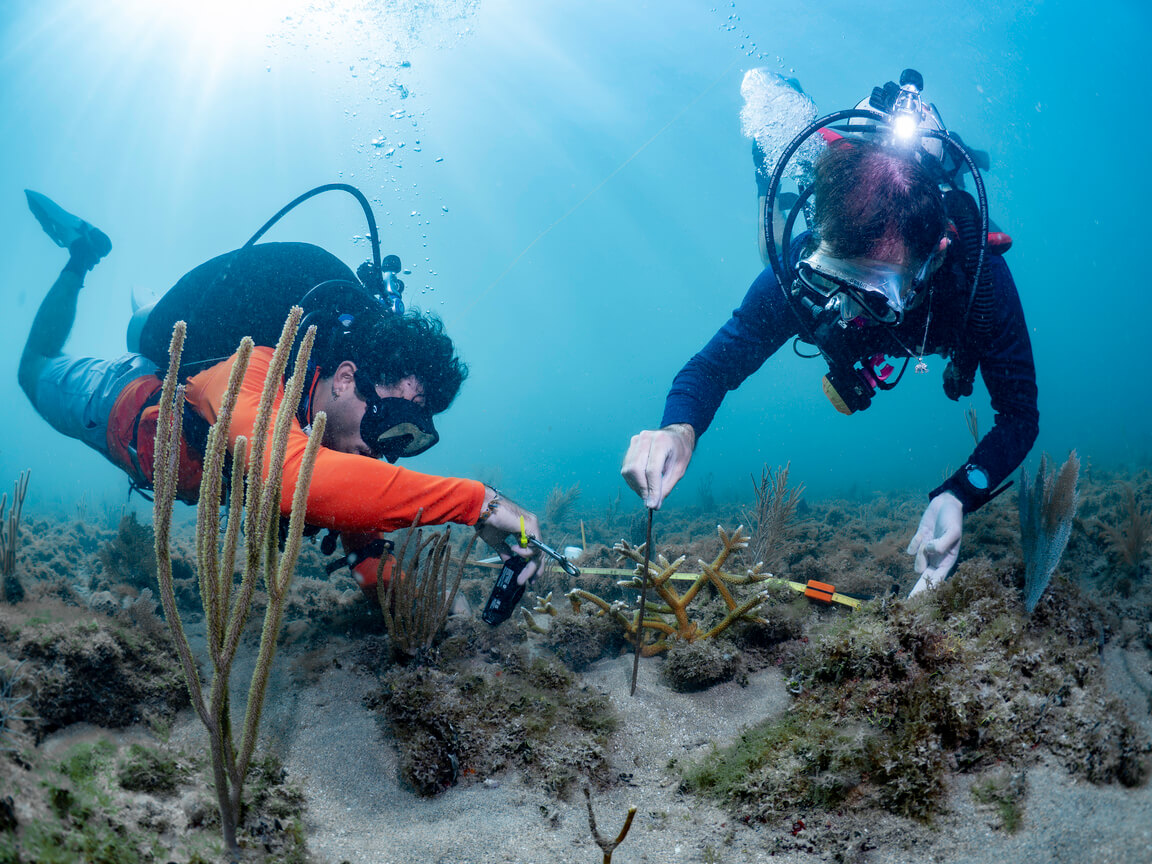
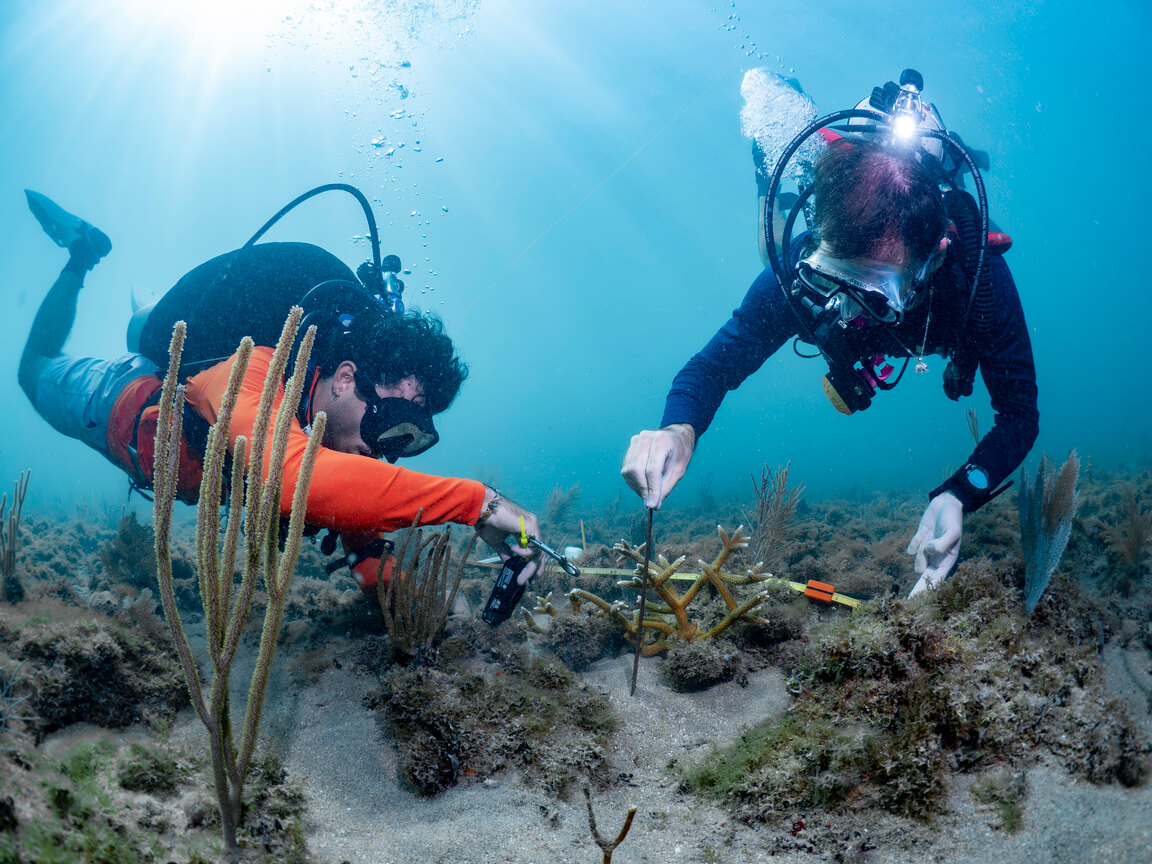
This project aims to monitor nearshore reef sites located adjacent to the dredging operations, with a particular focus on ESA-listed Acropora cervicornis (staghorn coral) colonies. Researchers are assessing coral health, sediment conditions, and overall reef impacts to better understand how dredging-related activity may influence these vulnerable coral populations.
Application
Data collected through these surveys will help researchers and project stakeholders better understand the environmental footprint of the Port Everglades Sand Bypass Project and its potential impacts on nearby coral reef ecosystems. Ongoing monitoring of tagged staghorn coral colonies and sediment conditions may help inform adaptive management strategies intended to minimize impacts to sensitive reef habitats during dredging operations.
The project also contributes valuable long-term monitoring data for Southeast Florida’s nearshore reefs, including naturally occurring populations of Acropora cervicornis, a threatened coral species protected under the Endangered Species Act. Findings from this work could potentially contribute to future environmental assessments or regulatory discussions related to coastal infrastructure and dredging activities.
Expedition Summary
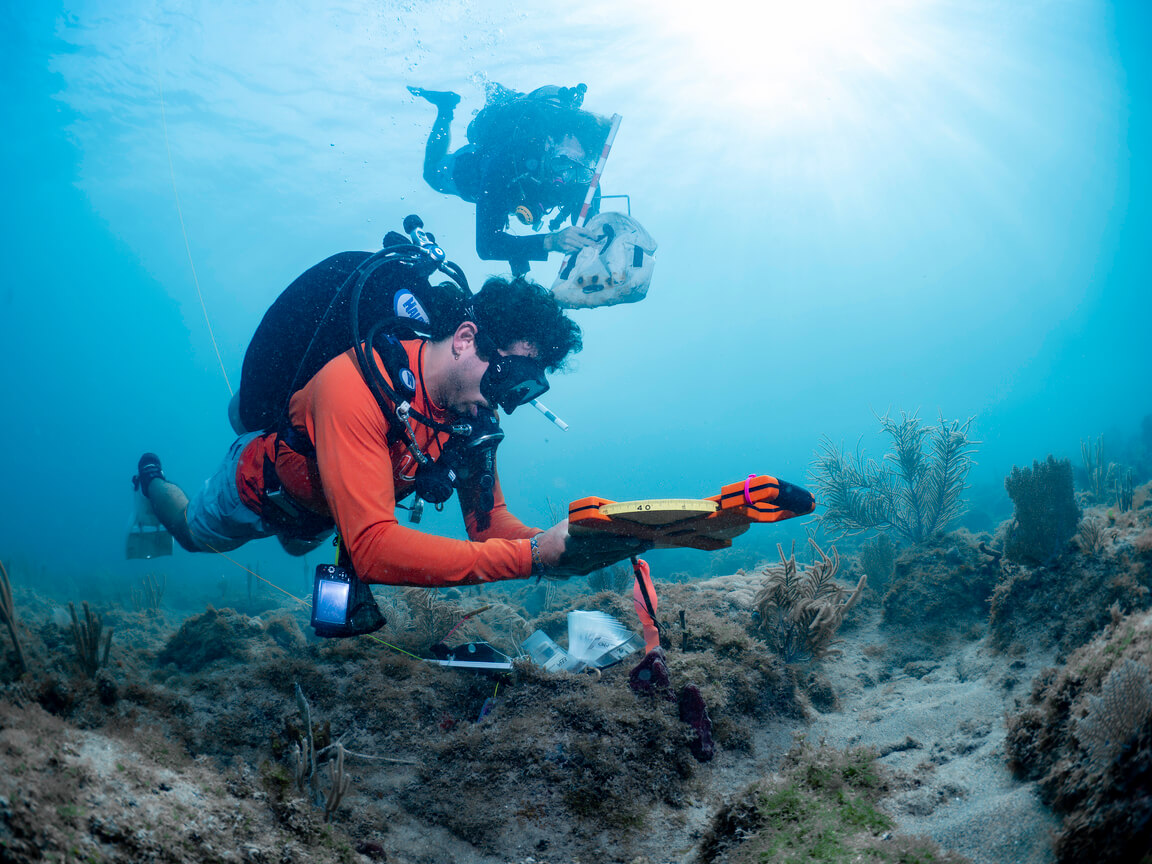
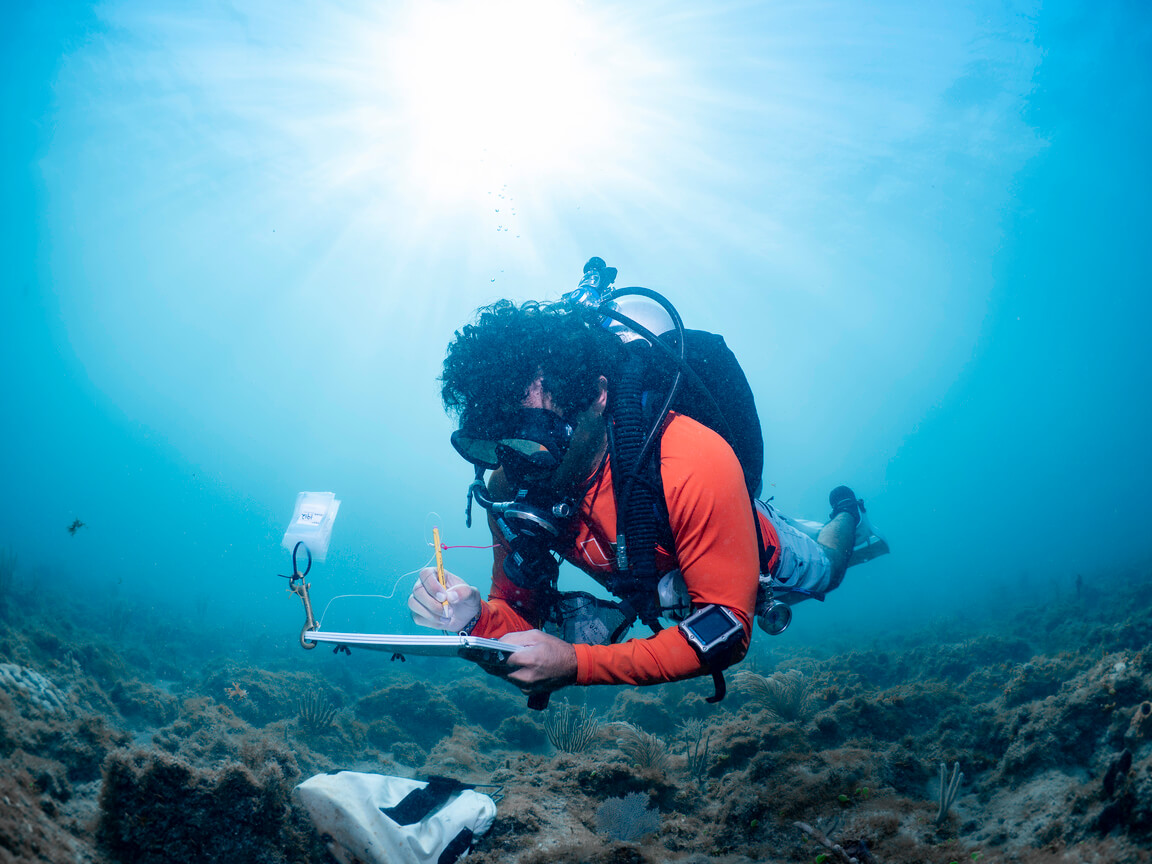
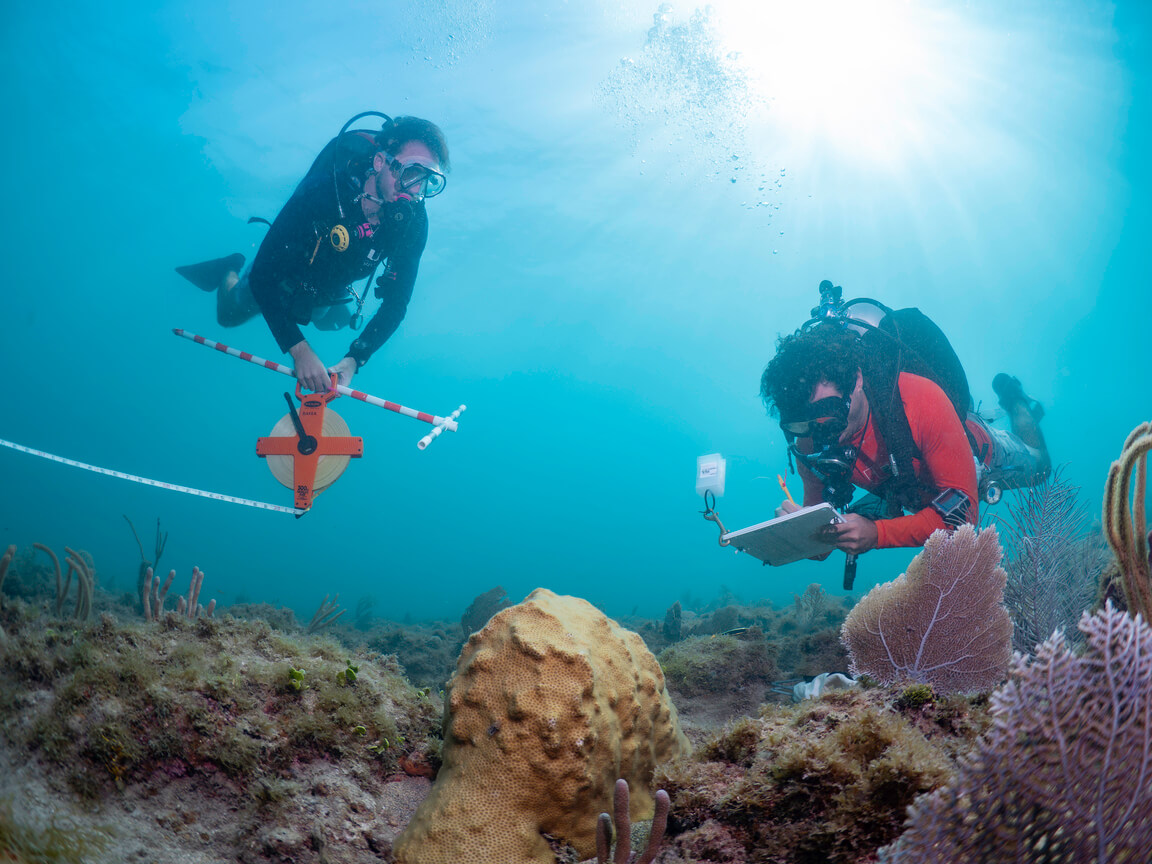
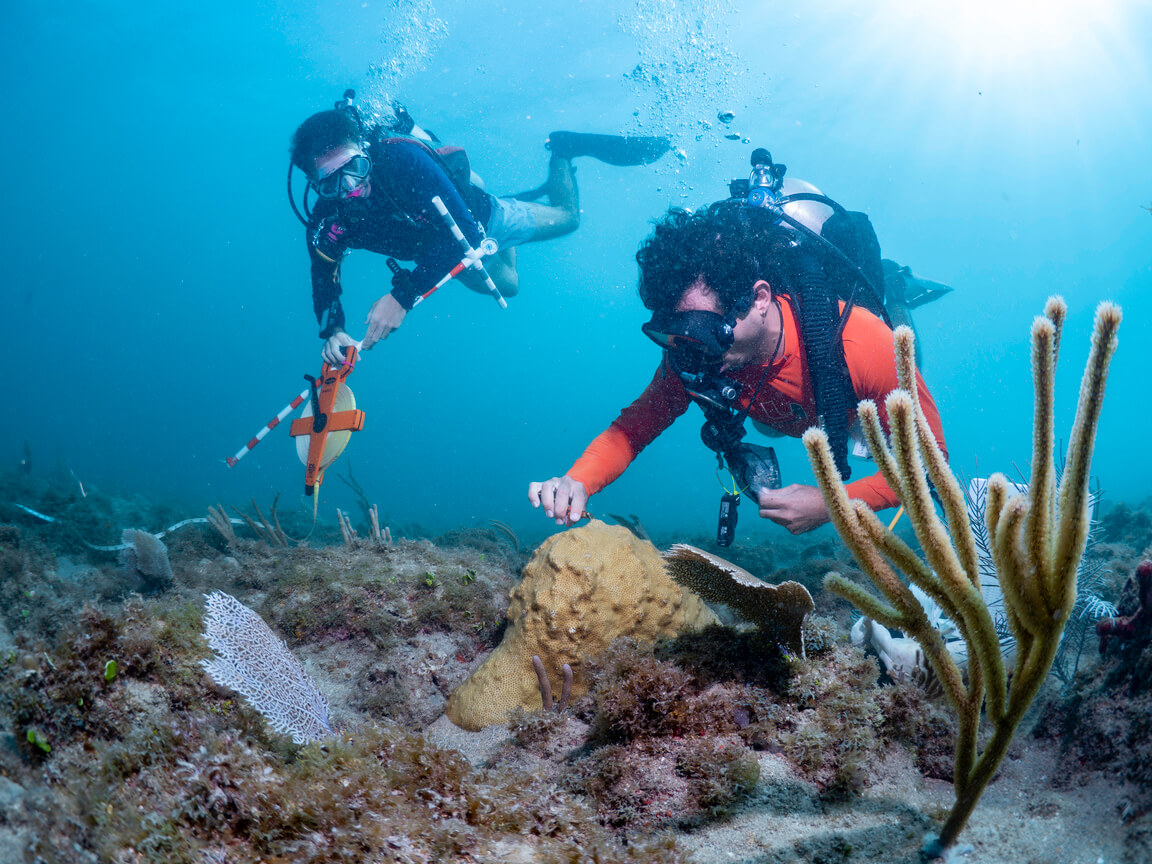
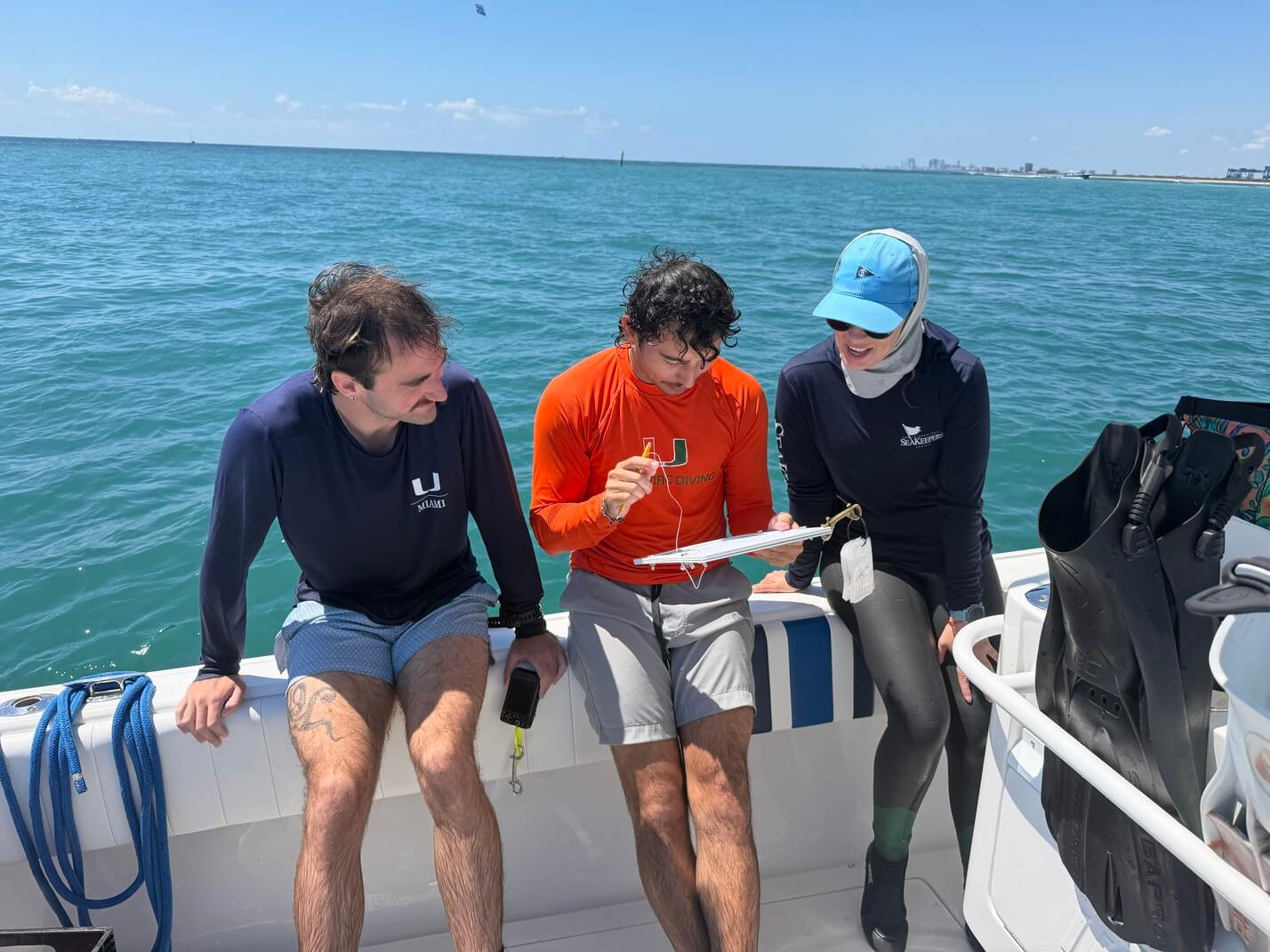
On May 16, 2026, The International SeaKeepers Society supported researchers from the University of Miami’s Coral Reef Futures Lab aboard DISCOVERY vessel The Dude to conduct ecological monitoring surveys associated with the Port Everglades Sand Bypass Project off Fort Lauderdale, Florida.
Researchers surveyed four reef sites containing tagged Acropora cervicornis (staghorn coral) colonies located near the dredging and sand bypass operations. The team successfully located and assessed nearly all tagged colonies across the survey sites. Following completion of the tagged coral assessments, researchers conducted an additional scouting transect closer to the active bypass work to observe reef and sediment conditions.
The expedition launched early in the morning prior to the start of dredging operations, allowing researchers to complete portions of the surveys under relatively clear conditions. Visibility later deteriorated as operations progressed due to elevated sediment in the water column associated with the dredging activity, making some survey efforts more challenging during the latter part of the expedition. Despite the reduced visibility, researchers were surprised by the relatively low levels of sediment deposition observed on nearby reef sites during the surveys considering the high levels of sediment in the water column.
All work was conducted under research permit FWC SAL-24-2243F-SCRP.
Location
Port Everglades, Fort Lauderdale, Florida
Duration of Project
This was the first outing to survey the impacts of the Port Everglades sand bypass work on nearby corals since dredging operations began in October 2025.
Leadership
Research Team
Fabrizio Lepiz Conejo, University of Miami
Joshua Hardin, University of Miami
Aubri Keith, The International SeaKeepers Society – Photographer
Photo Gallery