
- SeaKeepers' Vessel DISCOVERY II
U.M. Shark Research Acoustic Receiver Array Maintenance
- May 29, 2026
- Miami, Florida
Project Overview
Coastal marine environments are some of the most ecologically and socio-economically important habitats on the planet. Coastal development and urban sprawl are major threats to these ecosystems, with highly human-impacted areas generally displaying lower species diversity, ecological stability, and productivity. However, many of these habitats are used by a variety of flora and fauna that were previously associated with undisturbed habitats. Living alongside urban development may drive alterations in access to food and susceptibility to predation for marine species. To date, research intended to understand and mitigate the effects of marine biodiversity loss have often focused on preserving large and undegraded natural habitats, undervaluing altered urban ecosystems. The goal of this project is to better understand how coastal urbanization affects the distribution, habitat use, and ecology of elasmobranchs, especially juvenile and small-bodied sharks off Miami, Florida. These nearshore environments can act as nursery habitats for juvenile sharks which may use mangroves and seagrass beds as protection and hunting grounds while young. The quality of available nursery habitat can exert an important influence on juvenile behavior and survivorship. This project aims to evaluate the distribution, habitat use, and residency patterns of coastal sharks within Biscayne Bay across a gradient of habitats from highly altered and developed to relatively undisturbed.
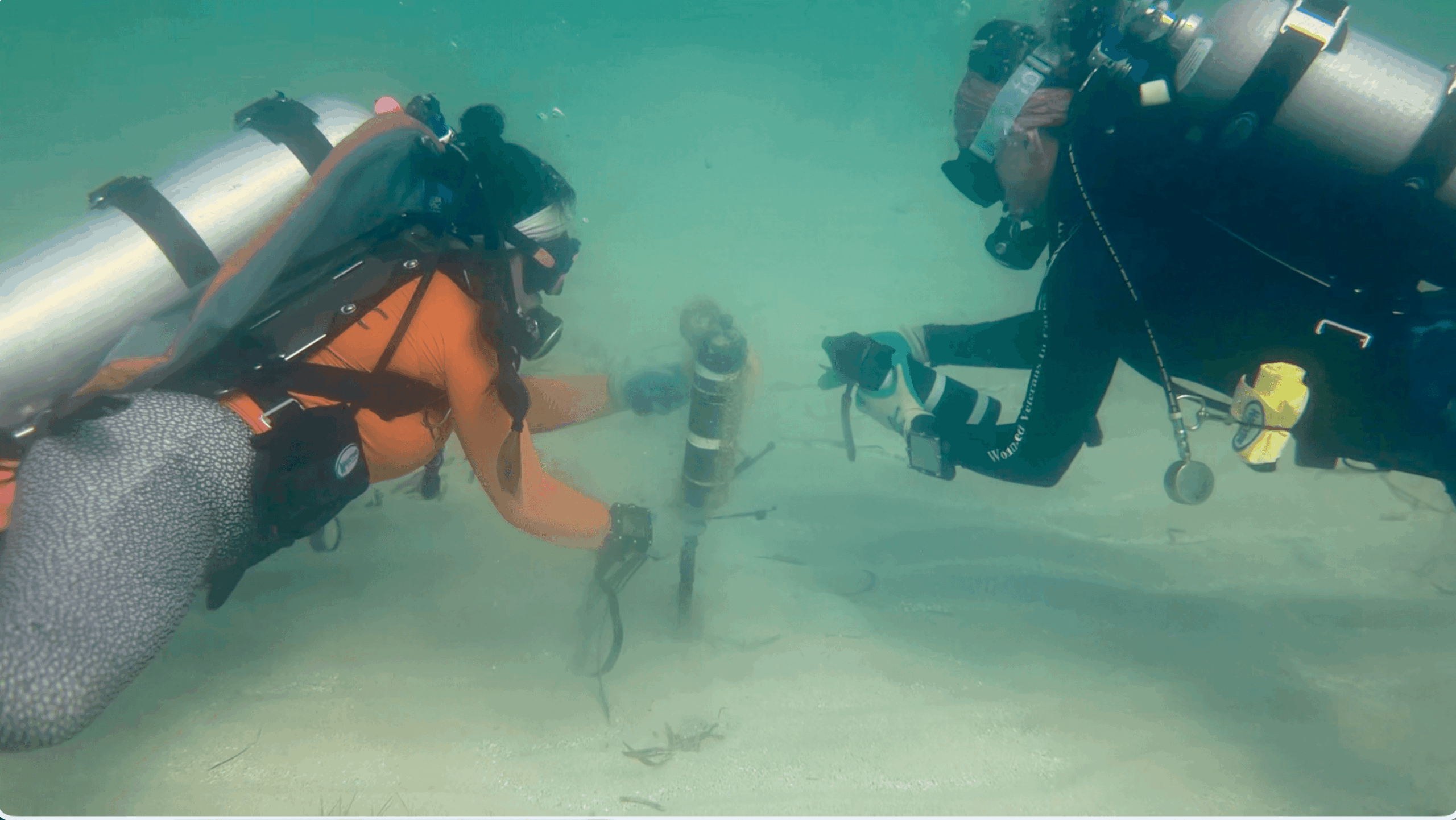
The UM Shark Research and Conservation Program (SRC) manages an acoustic telemetry array in Biscayne Bay and along the Miami Reef Tract. The array is currently made up of 30 active acoustic receivers with the goal of continuing to expand its range by adding new receivers. SRC aims to utilize its acoustic array to characterize small-scale movement of coastal sharks.
Application
The goal of this project is to better understand how coastal urbanization affects the distribution, habitat use, and ecology of elasmobranchs, especially juvenile and small-bodied sharks off Miami, Florida. These nearshore environments can act as nursery habitats for juvenile sharks which may use mangroves and seagrass beds as protection and hunting grounds while young. The quality of available nursery habitat can exert an important influence on juvenile behavior and survivorship. This project aims to evaluate the distribution, habitat use, and residency patterns of coastal sharks within Biscayne Bay across a gradient of habitats from highly altered and developed to relatively undisturbed.
Data from theacoustic array could be used to help determine critical habitat for endangered species in Biscayne Bay.
Expedition Summary
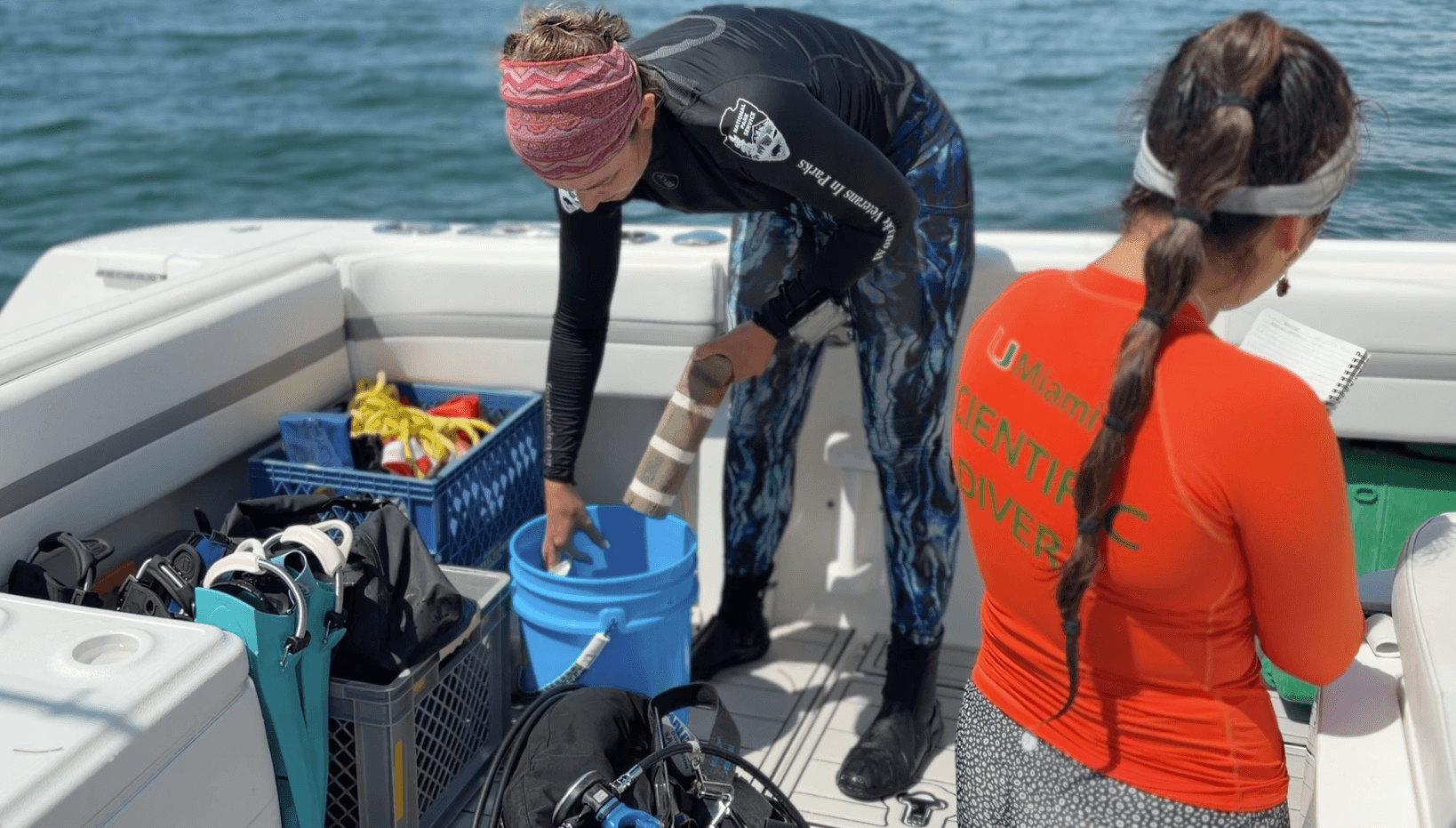
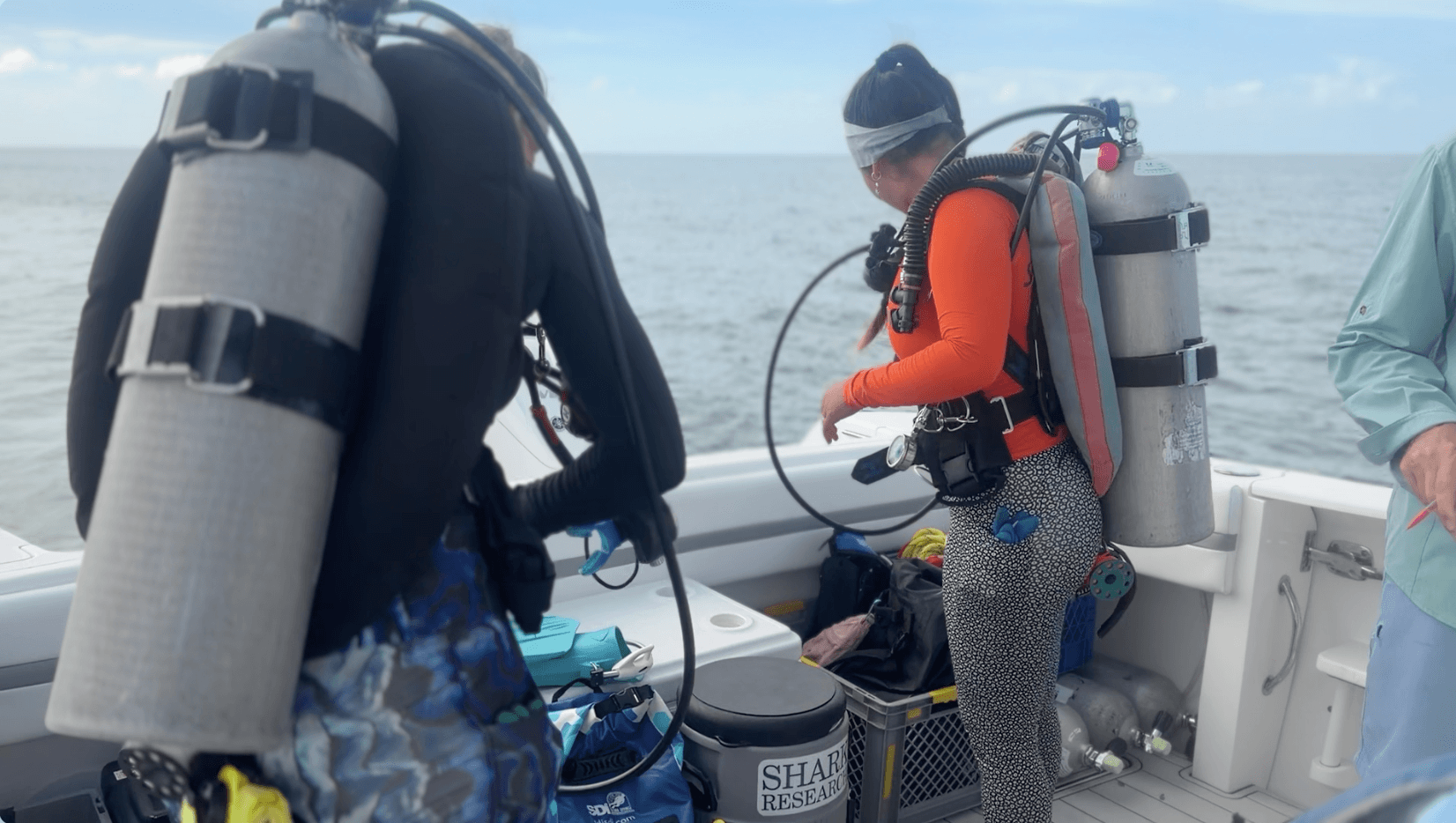
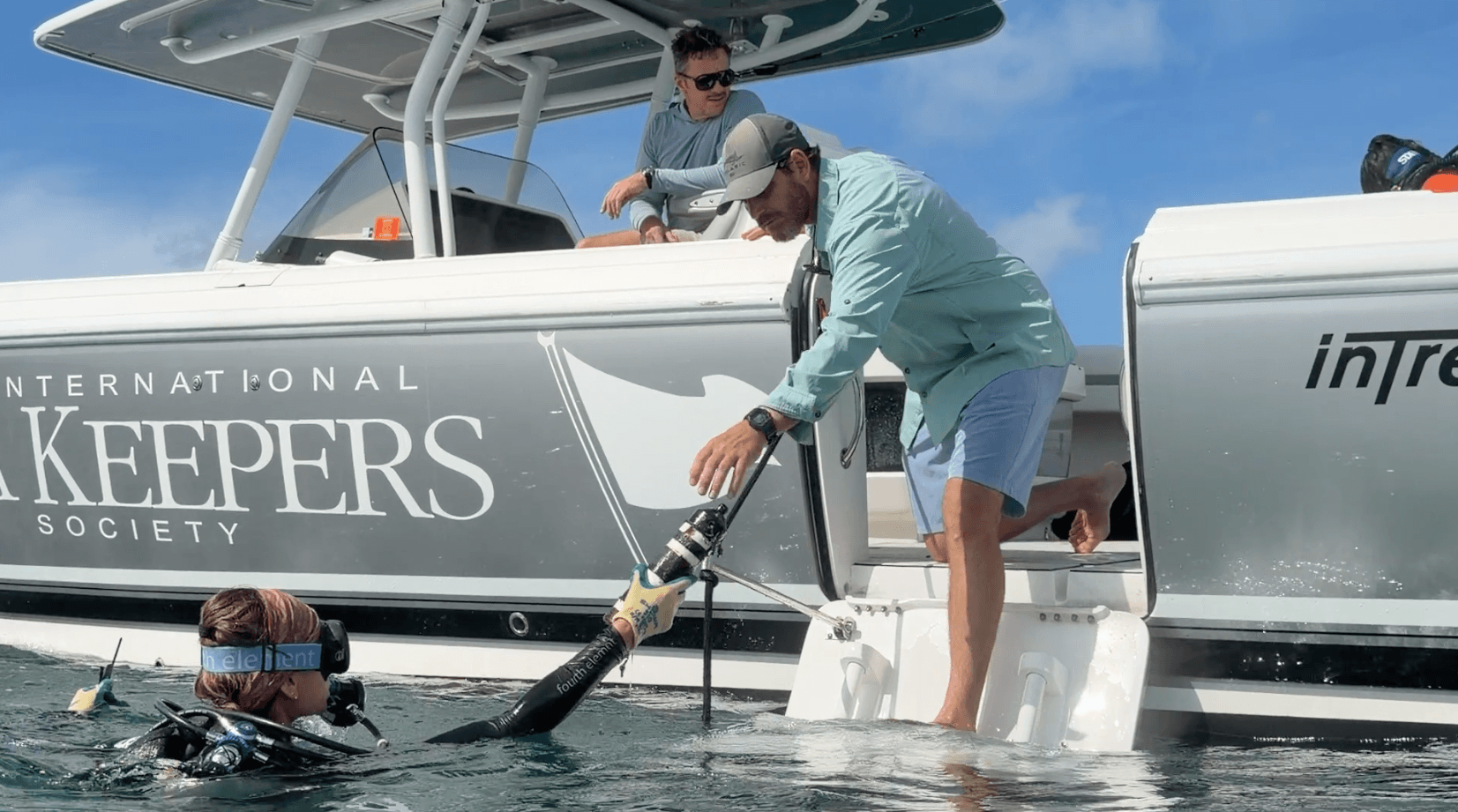
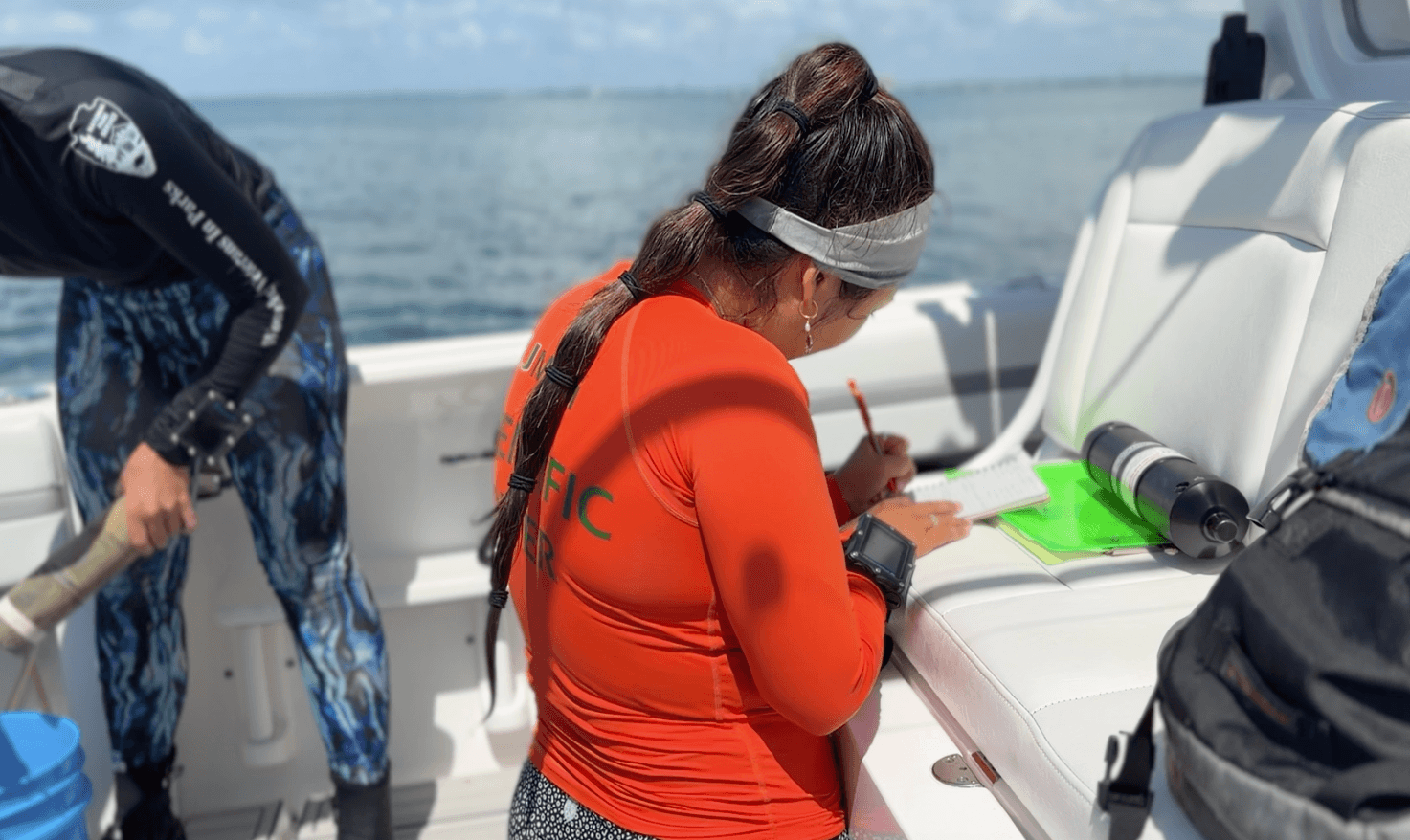
On May 29, 2026, The International SeaKeepers Society assisted a group of researchers from the University of Miami’s Shark Research and Conservation lab to locate and perform maintenance on its acoustic telemetry receiver array. Aboard SeaKeepers’ Vessel, DISCOVERY II, researchers Emma DiLello and Wendy Miyazaki were able to perform scuba divining operations in three different sites. They were able to retrieve two older receivers which will be brought back to the lab for maintenance and data download. They were also able to install three new receivers in those same sites.
Location
Biscayne Bay and the Miami Reef Tract
Duration of Project
SRC’s acoustic telemetry array requires ongoing maintenance to ensure that all receivers are working properly. SRC aims to get out as often as once a month to conduct service or alternatively conduct larger periods of service on a regular basis about three times a year.
Leadership
Research Team
Emma DeLillo
Wendy Miyazaki
Nick Perni
Tony Gilbert (photographer and spotter)
Partner Sites

Photo Gallery