

- DISCOVERY Yacht Legend
SUTD Research Collaboration
- January 9, 2026 – April 27, 2026
- Singapore, Singapore
Project Overview
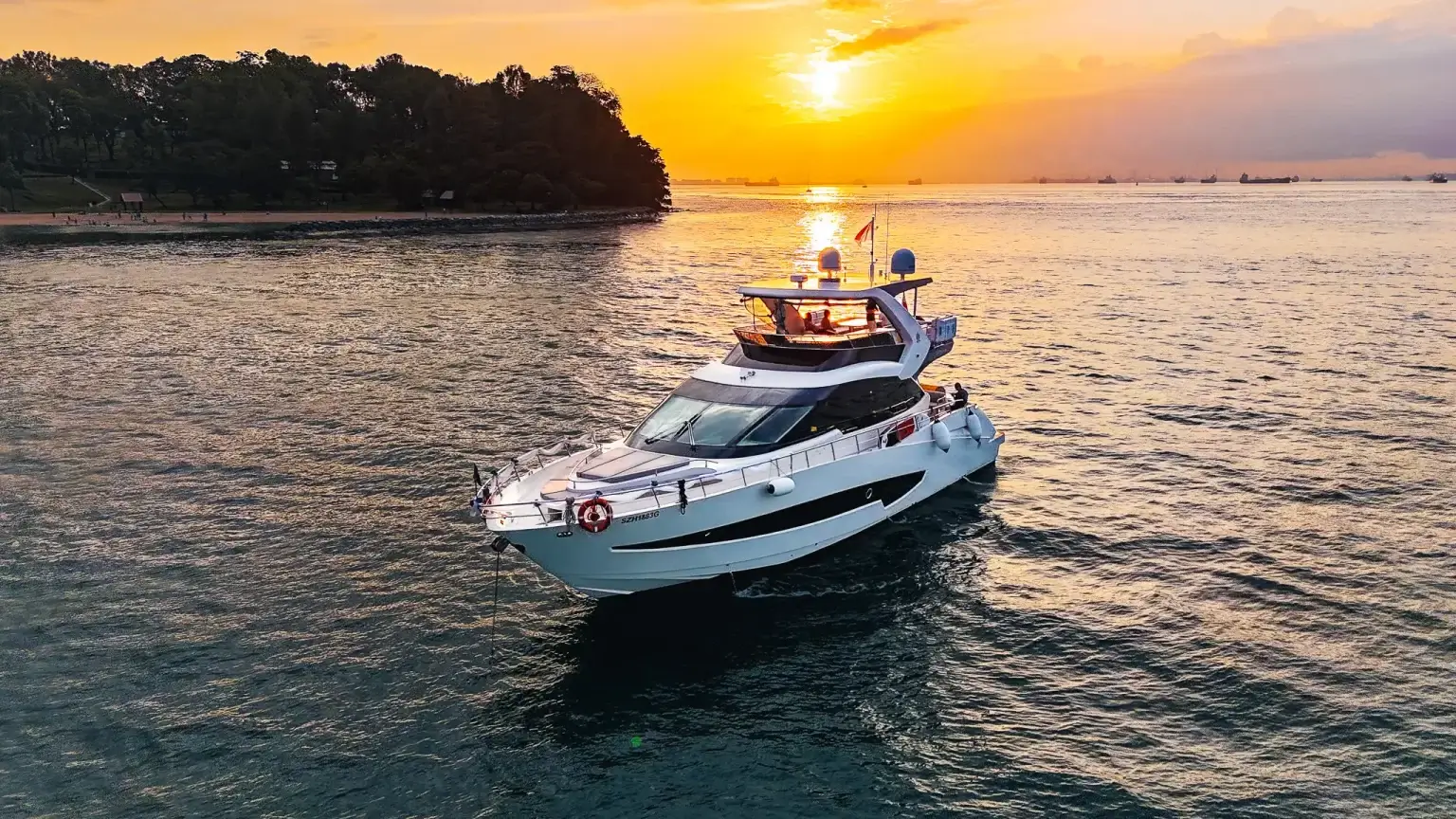
We’re excited to share this Singapore University of Technology and Design (SUTD)-led research project focused on advancing ship hull biofouling detection and inspection using robotics and edge-AI. As part of this collaboration, The International SeaKeepers Society was proud to support the project through our DISCOVERY Program, with the DISCOVERY Yacht Legend serving as the research platform in Singapore waters.
By combining advanced robotics, real-time data processing, and in-situ testing, this work supports more efficient inspections, improved fuel performance, and healthier oceans a great example of science and technology driving real-world maritime sustainability. Thank you to the Singapore University of Technology and Design (SUTD) research team and partners for the collaboration and innovation.
Application
The project addresses key maritime challenges such as the spread of invasive species and reduced vessel efficiency caused by hull fouling. It also supports Singapore’s ambition to become a “stop-and-go” certification hub for ship inspections
Expedition Summary
A major first-quarter 2026 milestone for SeaKeepers Asia was a research initiative in collaboration with the Singapore University of Technology and Design (SUTD) . Led by Dr Malika Meghjani and SUTD’s MARVL Lab, the project brings together partners including A*STAR, with funding from the National Robotics Programme. It focuses on developing automated solutions for ship hull biofouling detection and inspection using robotics and edge-AI technologies.
As part of this effort, SeaKeepers Asia deployed the DISCOVERY Yacht Legend in Singapore enabling real-world testing and validation. The team made significant progress, including developing fast, in situ ship hull mapping techniques to detect biofouling and structural defects. Additional milestones included real-time visual enhancement systems, biofouling annotation capabilities, and automated reporting tools that standardise inspection outputs.
Field validation was successfully conducted in Singapore waters, with support from the National Marine Laboratory at St John’s Island, and in alignment with International Maritime Organisation (IMO) standards.
The project addresses key maritime challenges such as the spread of invasive species and reduced vessel efficiency caused by hull fouling. It also supports Singapore’s ambition to become a “stop-and-go” certification hub for ship inspections. Overall, this collaboration highlights how integrating science, robotics, and AI can deliver impactful sustainability solutions, while strengthening SKA’s position as a credible facilitator of applied marine innovation.
Location
Singapore, Singapore
Duration of Project
Since mid 2025