

Big Submersible Shark Search
Project Overview:
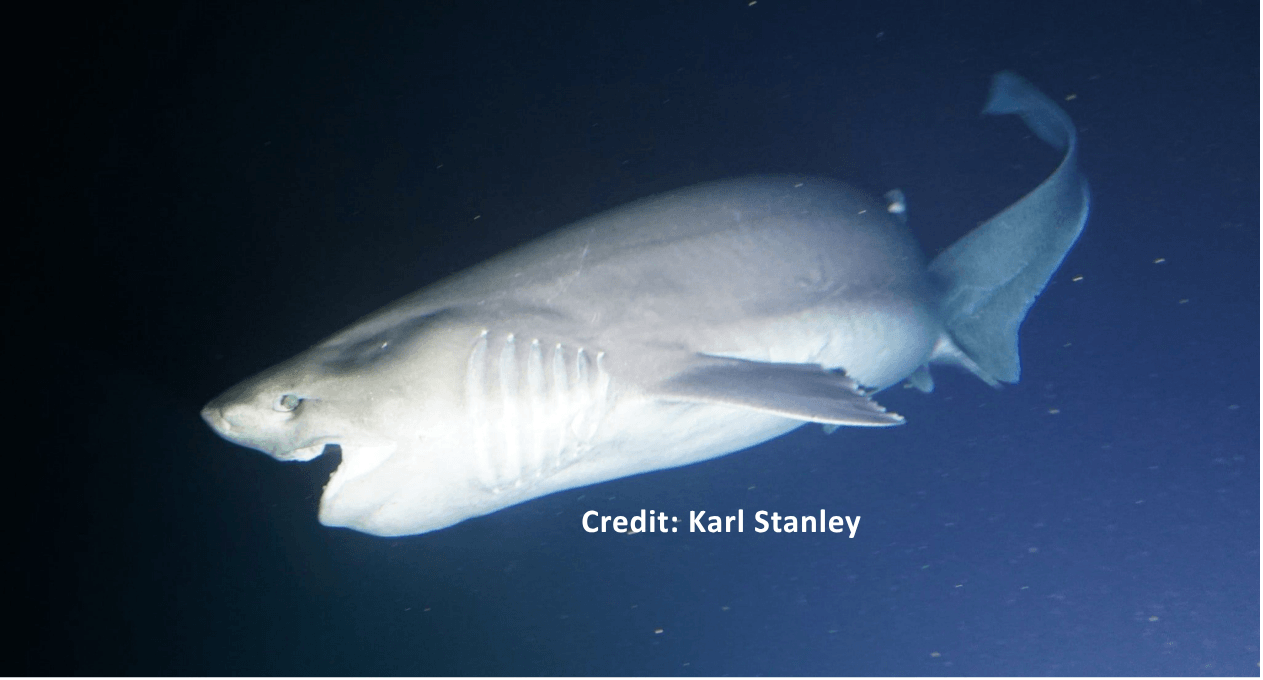
The deep ocean, defined as the region below 200m depth, remains largely understudied due to the physical challenges and financial barriers associated with accessing the region. As the deep ocean becomes increasingly threatened by human activities, such as deep-sea trawling, it is important that we learn more about deep-sea biodiversity before it is irreversibly harmed and ecosystems permanently eradicated. The Deep Shark Research Group (DSRG) at the University of Exeter is keen to learn more about the biology and distribution of deep-sea sharks in particular by engaging the Citizen Science community. They are inviting personal submersible users to contribute image data (still or video) of any deep-sea shark or ray encounters to form a Visual Data Repository (VDR). The DSRG will utilise these submissions to improve understanding of habitat preferences, behaviour and movements of deep-sea shark species.
Program Partners
- University of Exeter
Location
- Global
Expected Time Frame
- Ongoing
Citizen Science activity parameters listed above are flexible and negotiable.
Background:
Sharks that spend most of their life below 200m depth are classified as โdeep-seaโ sharks. Like their shallow water counterparts, deep-sea sharks are often top predators in the food chain, regulating prey population sizes to maintain a healthy, balanced ecosystem. However, deep-sea sharks are slow-growing and have few young over their lifetime, making them highly vulnerable to population declines. Although this group accounts for 41% of all known shark and ray species, only 7% of all published research from the last 5 years has focussed on deep-sea species. This disparity is mainly due to the logistical difficulty, and associated cost, of accessing deep-water environments for research. With deep-sea habitats facing increasing threats from human activities, it is paramount that there is increased effort to improve our understanding of deep-sea shark species, many of which have seen upwards of 90% reductions in their populations.
Mission:
Privately-owned submersibles have the ability to greatly enhance scientific access to deep-sea environments and subsequent knowledge about the species residing within. By transforming underwater cruises into platforms for data collection, submersible owners, crews and guests can provide invaluable insight into the movements, habitat preferences and behaviours of deep-sea sharks. To take part in the Big Submersible Shark Search, deep-sea explorers are asked to submit image data (still or video) of any deep-sea shark encounters from greater than 200m depth using a simple Google Form. Alongside each image, researchers require additional details about the sighting, namely Date, Time, Depth, Location (Latitude and Longitude), Supporting Vessel and Contact Details for the Contributor.
Data Impact:
All collected data will be used to form a Visual Data Repository (VDR), which will provide the baseline for investigations into deep-sea shark ecology, biogeography and environmental interactions. Data may be shared with students for the purposes of research only. Explicit permission will always be sought from the submitting person before any public use.
Relevant/Previous Scientific Publication(s):
- https://polarresearch.net/index.php/polar/article/view/8873/15288
- https://www.cambridge.org/core/journals/journal-of-the-marine-biological-association-of-the-united-kingdom/article/abs/population-biology-and-ageing-of-the-deep-water-sharks-galeus-melastomus-centroselachus-crepidater-and-apristurus-aphyodes-from-the-rockall-trough-northeast-atlantic/E2996B16987619EFE315FDC45C3ABA6A
- https://www.nature.com/articles/s41559-018-0482-x
How to Participate:
To share your deep-sea shark sightings and contribute to the Big Submersible Shark Search, please email SeaKeepers’ Citizen Science Manager at rosemarie@seakeepers.org.
Program Partners:
Get Involved
If youโre interested in learning more about this specific program opportunity, please reach out to our team below to find out more about this program or get involved in other opportunities with SeaKeepers.
Explore More Opportunities
At-Sea Opportunities
Citizen Science Opportunities
Education Opportunities