



Deep Blue Curaçao: First Deep-Sea Survey of Curaçao’s Exclusive Economic Zone
Project Overview:
Deep Blue Curaçao will conduct the first systematic offshore and deep-sea scientific survey of Curaçao’s Exclusive Economic Zone (EEZ). Approximately 97 percent of the country’s waters are deeper than 200 meters, descending beyond 4,000 meters into the Venezuela Basin, yet these environments remain largely undocumented.
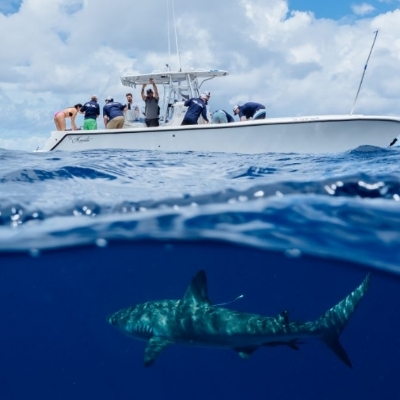
The expedition will examine the full water column, from the surface to the abyssal seafloor, using three complementary, non-invasive research methods. A free-fall benthic lander will record deep-sea scavenger communities on the seafloor, while a drifting multi-depth camera array will sample pelagic habitats at several depths. Continuous visual surveys and photo-identification will document cetaceans, seabirds, turtles, and other surface wildlife during vessel transits and daylight operations.
Together, these methods will establish an initial biodiversity baseline for Curaçao’s deep waters, including data on deepwater sharks, chimaeras, eels, cephalopods, crustaceans, cetaceans, seabirds, and other marine life. The research will also collect depth and temperature data to connect species observations with physical conditions.
Program Partners
- Caribbean Cetacean Society
- Ministry of Nature, Health and Environment of Curaçao
- Blue Marine Foundation
- WWF Netherlands
- CARMABI Foundation
- Curaçao Sea Aquarium Parks
- Profound
Location
- Curaçao
Expected Time Frame
- Last week of October 2026
Duration of Expedition
- Three two-day survey sessions or one continuous week if better suited to the vessel’s schedule
Accommodation Needed
- 3–6 Researchers + 1 SeaKeepers Representative
Special Equipment Needed
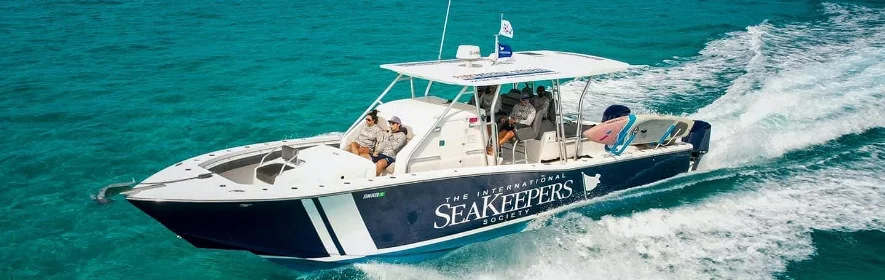
- Approximately 4 by 3 meters of clear working deck space, Swim platform or other safe and accessible means of deploying and recovering equipment at the waterline, Lazarette or another secure storage compartment for research equipment
Background:
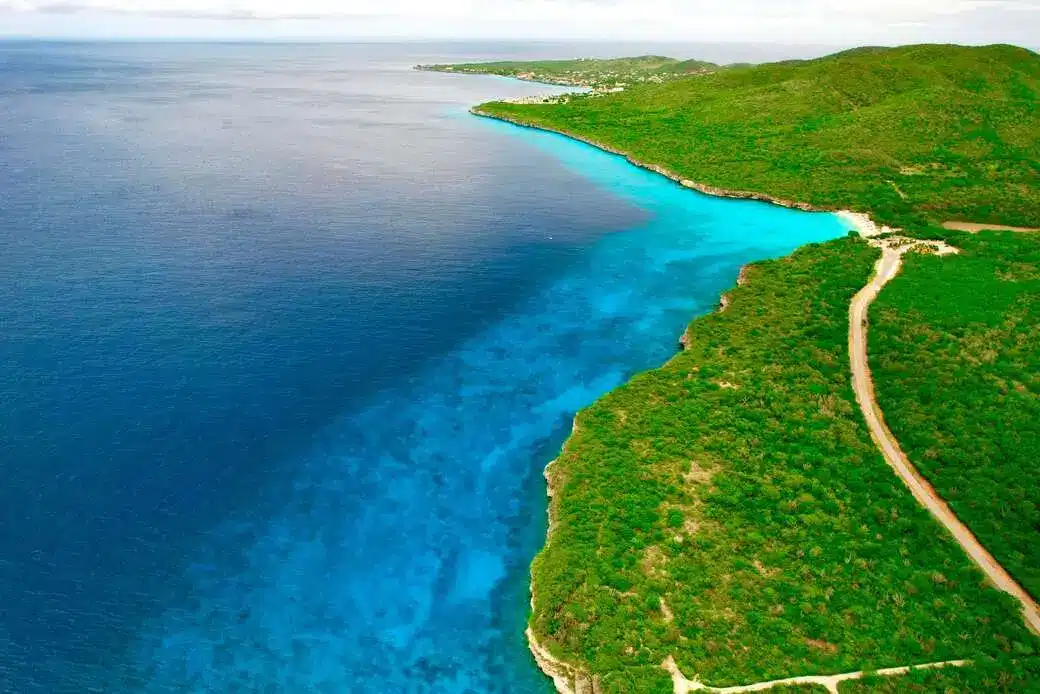
Curaçao’s northern slope descends rapidly from coastal reefs to abyssal depths, placing deep-sea habitats within relatively close reach of port. Despite this accessibility, no systematic baited-camera survey has characterized the country’s benthic or deep-pelagic communities, and much of the EEZ’s physical structure and biodiversity remain unrecorded.
The Caribbean Cetacean Society has worked as a scientific partner of the Government of Curaçao since 2023, producing systematic cetacean survey data under formal research agreements with the Ministry of Nature, Health and Environment. This work builds upon more than a decade of conservation efforts by local and international partners seeking to strengthen marine protection in Curaçao.
The government is now preparing to designate an offshore Marine Protected Area encompassing 30 percent of the country’s EEZ, supporting the global 30×30 target established under the Kunming-Montreal Global Biodiversity Framework. The Ministry has requested scientific data and imagery that can help demonstrate what the proposed area protects, inform its boundaries and management measures, and establish a baseline for monitoring its effectiveness.
Deep Blue Curaçao will respond to this need while creating a standardized, repeatable survey platform that can support future deep-sea research throughout the Dutch Caribbean.
Mission:
The mission of Deep Blue Curaçao is to produce the first biodiversity baseline for the deep waters comprising approximately 97 percent of Curaçao’s Exclusive Economic Zone and provide the scientific evidence and imagery needed to designate, manage, and defend the country’s first offshore Marine Protected Area.
Key objectives include:
-Establishing the first annotated species baseline for Curaçao’s benthic and deep-pelagic communities
-Documenting the depth-stratified distribution and relative abundance of deep-sea fauna, including sharks, chimaeras, grenadiers, eels, amphipods, and cephalopods
-Recording temperature and depth data to relate biodiversity observations to physical conditions and support future monitoring
-Collecting effort-based distribution data and photo-identification imagery for cetaceans, seabirds, and turtles
-Providing a management baseline for the proposed offshore Marine Protected Area and supporting restrictions on harmful activities such as deep-sea mining
-Capturing professional footage of Curaçao’s deep-sea life for public education, policy communications, and a mini-documentary in English and Papiamentu
-Training Curaçaoan scientists and students in standardized deep-sea survey methods
-Establishing a reusable monitoring platform for Curaçao and the wider Dutch Caribbean
Applications:
The expedition’s findings will directly support the Government of Curaçao’s planned offshore Marine Protected Area. Biodiversity data will help inform the area’s boundaries and protection measures, establish indicators for evaluating management effectiveness, and provide scientific support for restricting potentially harmful activities, including deep-sea mining.
Results will contribute to Curaçao’s reporting under Target 3 of the Kunming-Montreal Global Biodiversity Framework. The research team also plans to prepare a non-technical policy brief for ministerial use and present findings at the Gulf and Caribbean Fisheries Institute Conference in November 2026.
Curaçaoan scientists, students, and early-career researchers will have opportunities to participate in field activities and receive training in the equipment and survey protocols. CARMABI Foundation will serve as a local scientific anchor, helping connect the project with Curaçao’s research community.
The imagery and data will also support educational materials, public outreach, infographics, and a mini-documentary produced in English and Papiamentu. Scientific results will be published open access, with a peer-reviewed paper planned within 12 months of the expedition.
Get Involved
If you’re interested in learning more about this specific program opportunity, please reach out to our team below to find out more about this program or get involved in other opportunities with SeaKeepers.
Explore More Opportunities
At-Sea Opportunities
Citizen Science Opportunities
Education Opportunities