

Fear and Foraging: Measuring Predation Risk in the Florida Keys

Project Overview:

Have you ever wondered how a fish decides where to forage, or what influences its choice to keep feeding versus swimming away to avoid danger?

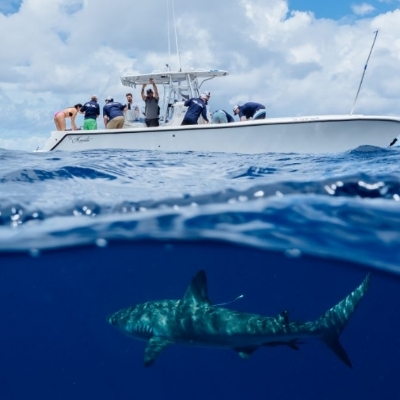
This field study explores how reef fish perceive risk in different parts of a reef. Marine scientists from Florida International Universityโ€™s Biscayne Bay Campus will use scuba diving and photogrammetry to create detailed 3D models of several patch reefs in the Upper Florida Keys. These models will help guide where simple foraging experiments are placed to understand how safe or risky fish perceive different areas while feeding.

The results will help researchers better understand the condition of Floridaโ€™s patch reefs, how predators influence fish behavior, and how reef-associated species such as white grunt and yellowtail snapper may change their behavior as reefs degrade.

Program Partners

  • FIU Tropical Fish Ecology Lab
  • NOAA

Location

Expected Time Frame

Duration of Expedition

  • 7 Days

Accommodation Needed

  • 2 Researchers & 1 SeaKeepers Representative

Special Equipment Needed

  • Licensed captain, Swim platform (hydraulic or stationary) or easy access to water, Air compressor (for SCUBA diving)

Expedition parameters listed above are flexible and negotiable.

ForagingAssay (1)

Background:

Predators such as sharks, grouper, and eels play an important role in coral reef ecosystems, not only by feeding on other animals but also by influencing how prey move, hide, and behave. This concept, often referred to as the โ€œecology of fear,โ€ is well documented in land-based ecosystems, where predators shape the behavior of species through perceived risk rather than direct encounters.

While this effect has been widely studied in places like the American Southwest using animals such as rodents and hawks, it has been less explored on Floridaโ€™s coral reefs. Insights from these terrestrial studies have helped researchers develop new ways to measure how much risk a reef fish perceives while foraging in different areas of a reef.

In recent years, Floridaโ€™s coral reefs have undergone significant changes, including shifts in predator populations and a loss of complex reef structure that provides shelter for fish. Using these new methods to measure perceived risk, researchers can better understand how reef fish respond to these changes and how important species such as yellowtail snapper and white grunt may alter their behavior in the future.

Mission:

Mission: Map and measure fear through foraging at patch reefs in the upper Florida Keys.

-Create 3D models of 5 patch reefs in the Florida Keys using SCUBA and photogrammetry.

-Deploy and retrieve fear-foraging assays at several locations on each mapped patch reef in the Florida Keys.

Applications:

Findings from this research may help inform fisheries management for important reef-associated species such as yellowtail snapper, grey snapper, and white grunt. Results will be published in a peer-reviewed scientific journal and shared with partners at NOAA, supporting ongoing efforts to better understand reef health and fish behavior.

The project also places a strong emphasis on education and outreach. Printed 3D reef models will be shared with local elementary schools during monthly STEAM nights, while findings will be presented within Florida International University through the annual Biosymposium and as part of doctoral dissertation research, with completion anticipated in 2027.

Get Involved

If youโ€™re interested in learning more about this specific program opportunity, please reach out to our team below to find out more about this program or get involved in other opportunities with SeaKeepers.

Explore More Opportunities

img at sea opportunities

At-Sea Opportunities

Browse other research opportunities around the world to support oceanographic research through our other branches of programming.
img citizen science opportunities

Citizen Science Opportunities

Browse other citizen science opportunities around the world to support scientists in their research.
img education opportunities

Education Opportunities

Browse education opportunities in South Florida, the United Kingdom and the South Pacific to support educational outreach for students.
img community opportunities

Community Opportunities

Browse community engagement opportunities in South Florida, the United Kingdom and the South Pacific to support local social responsibility and policy change.
img get involved form

Get Involved

To discover more about this program and contribute to the crucial work of ocean conservation and scientific research, please fill out the form below and a member of our programming team will reach out to you with more details.

"*" indicates required fields

This field is for validation purposes and should be left unchanged.