Mapping Coastal Habitats and Fish Movement Using Multispectral Drones
Project Overview:
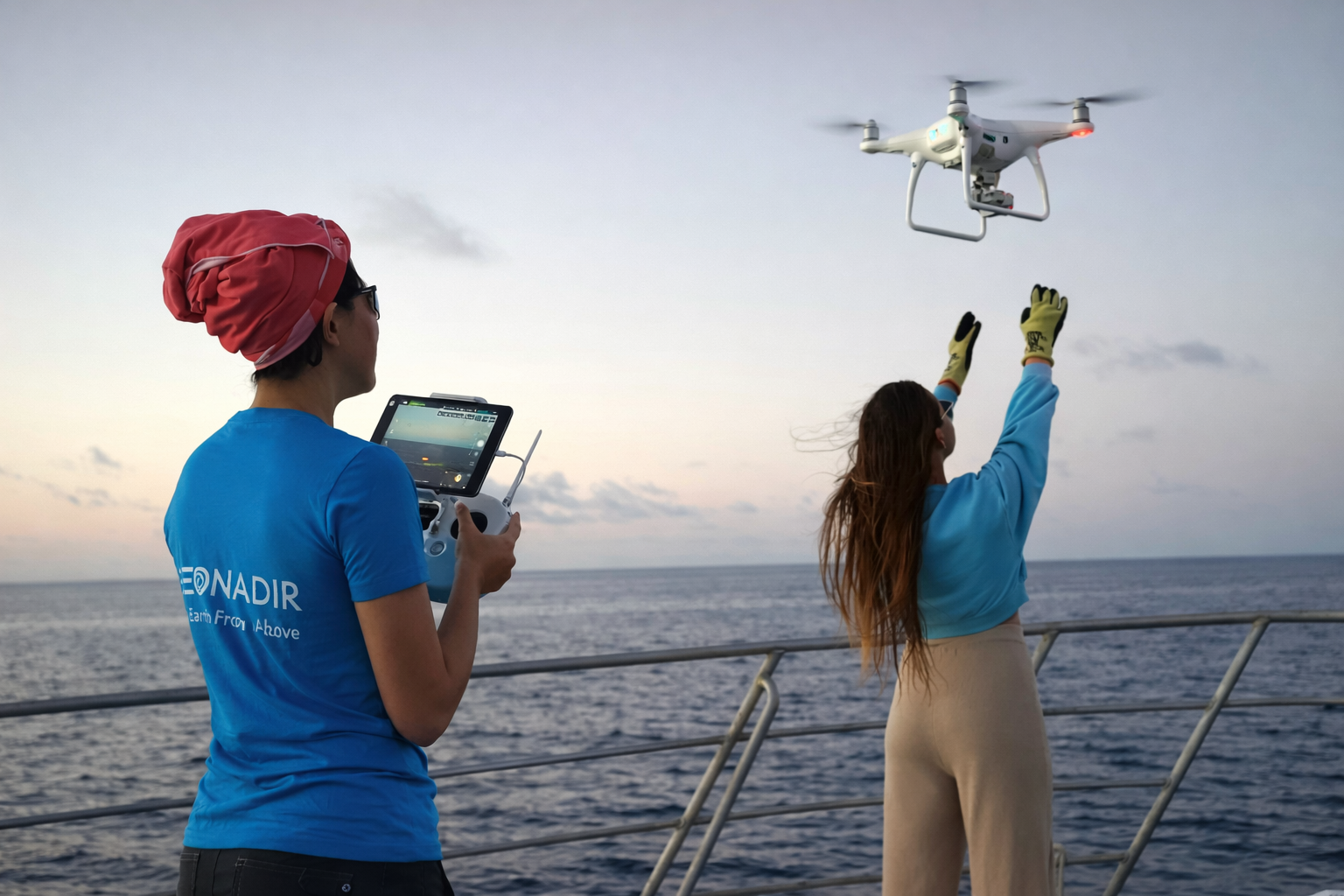
This project uses high-resolution multispectral drone imagery to improve mapping of coastal habitats and better understand how fish use complex reef-seagrass ecosystems in the Florida Keys. By integrating fine-scale drone data with acoustic telemetry of fish movements and satellite remote sensing products, researchers will bridge the gap between field observations and large-scale habitat maps.
The resulting multi-scale mapping framework will improve machine-learning classification models and upscaling algorithms used in coastal habitat mapping, while directly linking fish behavior to habitat structure and condition. These data will support ongoing efforts to design and refine no-take zones within the Florida Keys National Marine Sanctuary and improve management of economically important reef fish species.
Program Partners
- FIU Santos Seascape Ecology Lab
- The FISHSCAPE Project
Location
- Upper Keys, Florida
Expected Time Frame
- Between April - May 2026
Duration of Expedition
- 7 - 10 Days
Accommodation Needed
- 3 Researchers + 1 SeaKeepers Representative
Special Equipment Needed
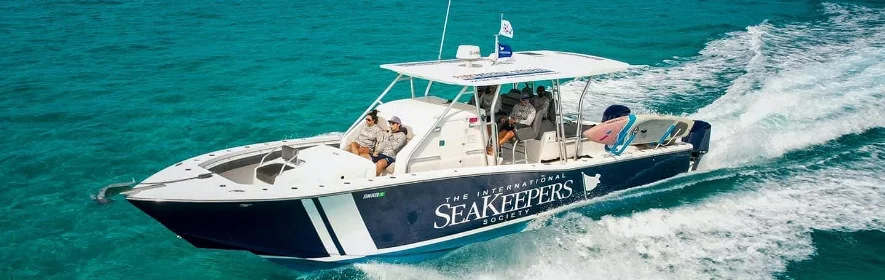
- Swim platform or other safe, easy access to the water, and sufficient unobstructed deck space to launch and recover a 1 m × 1 m drone.
Expedition parameters listed above are flexible and negotiable.
Background:
Accurate habitat maps are fundamental to understanding ecological processes in coastal systems, where seascape configuration strongly influences fish foraging behavior, prey availability, and predation risk. However, a persistent challenge in coastal habitat mapping is the mismatch in spatial resolution between in-situ observations and satellite imagery. While satellites provide broad spatial coverage, they often cannot resolve the fine-scale habitat features that structure ecological interactions.
Multispectral drone imagery offers sub-meter resolution capable of capturing small habitat patches and spatial heterogeneity that are invisible to satellites. Integrating drone-based imagery with satellite products provides a powerful pathway to improve habitat classification and mapping accuracy across large spatial scales.
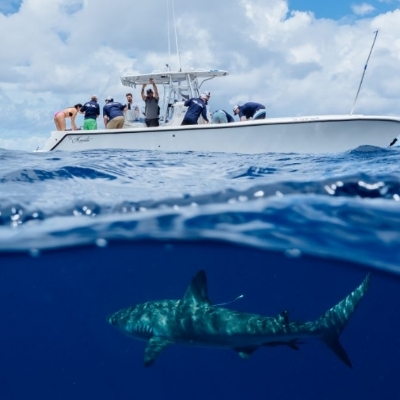
At the same time, recent advances in acoustic telemetry now allow researchers to track fish movements at very fine spatial and temporal resolutions. Fully leveraging these data requires habitat maps at comparable scales. By collecting multispectral drone imagery over an established acoustic telemetry array, this project directly links fine-scale habitat structure with fish movement patterns, offering new insight into how habitat configuration influences space use and connectivity in coastal ecosystems.
Mission:
The mission of this project is to collect high-resolution multispectral drone imagery over an established acoustic telemetry array in the Upper Florida Keys to support fine-scale habitat mapping and fish movement research.
This work will generate spatially detailed habitat maps that align with fish movement observations, enabling integration of remote sensing products across scales and improving understanding of how fish interact with reef-seagrass habitat mosaics.
Applications:
Data and products generated through this project will directly support a NOAA-funded effort focused on improving the design of no-take zones within the Florida Keys National Marine Sanctuary. Scientific findings will help inform resource managers on:
– How economically important reef fish species use reef-seagrass habitat mosaics
– The amount and configuration of seagrass habitat necessary to support healthy fish populations
– How fine-scale habitat structure influences movement, foraging, and connectivity
Results will be published in peer-reviewed scientific journals and shared with collaborators at Florida International University (FIU) and NOAA. The project will also demonstrate the value of uncrewed aerial systems (UAS) as a powerful tool for investigating fine-scale habitat properties in complex coastal environments, helping advance the use of drone-based methods in marine ecology and management.
Program Partners:
Get Involved
If you’re interested in learning more about this specific program opportunity, please reach out to our team below to find out more about this program or get involved in other opportunities with SeaKeepers.
Explore More Opportunities
At-Sea Opportunities
Citizen Science Opportunities
Education Opportunities