REDWING – Sentinel Glider Intercept, Repair, and Redeployment Mission
Project Overview:
REDWING is an innovative, long-range ocean observing mission led by Teledyne Marine in partnership with Rutgers University’s Center for Ocean Observing Leadership. Using a next-generation Sentinel glider, the project collects essential ocean data that supports improved understanding of ocean dynamics, weather systems, and climate variability while engaging global classrooms in real-time ocean science.
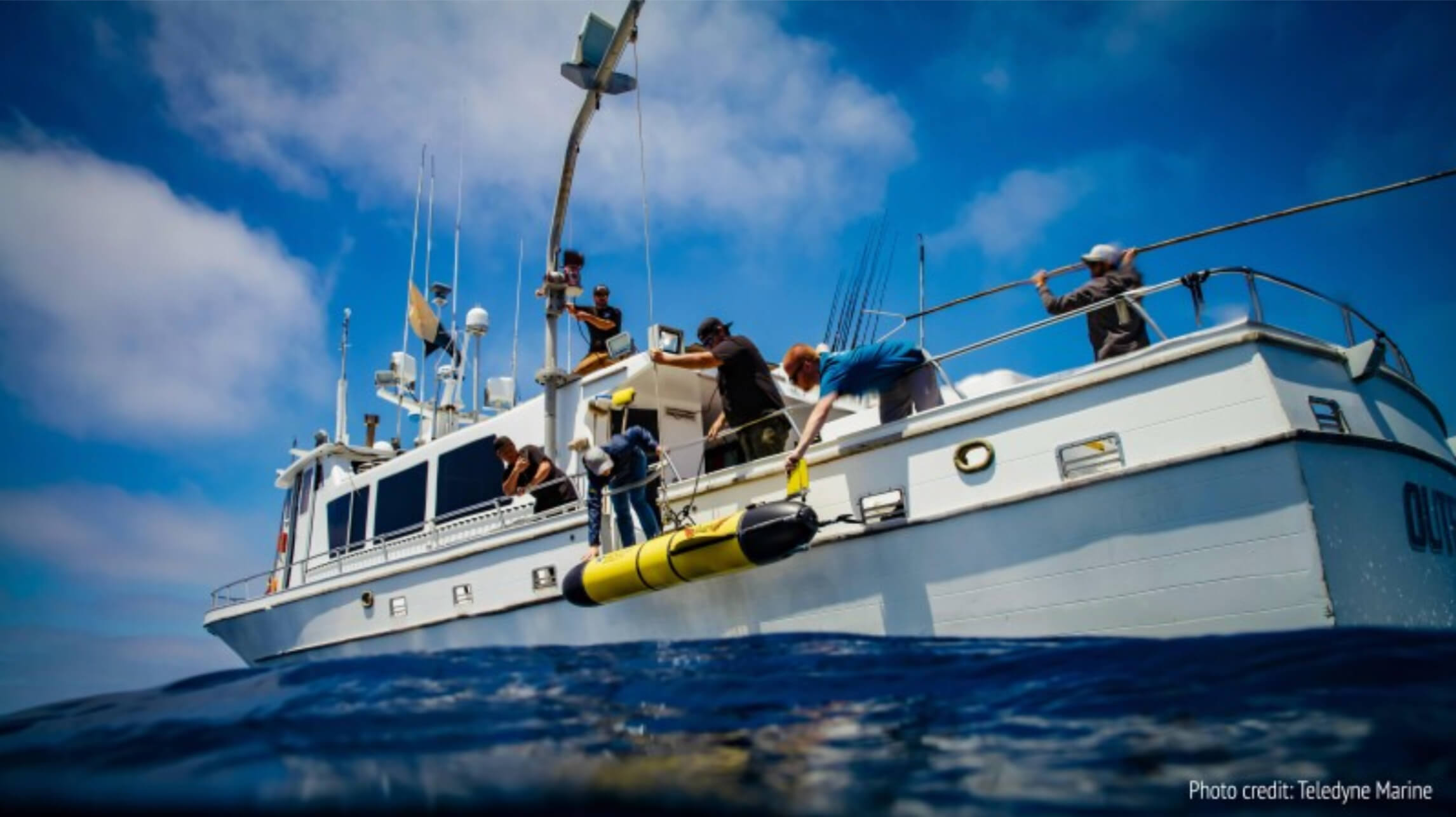
This SeaKeepers opportunity seeks a capable vessel to support a time-sensitive intercept, service, and redeployment operation for the REDWING glider in the North Atlantic during Spring 2026. The glider requires an at-sea maintenance intervention to restore full operational capability and ensure continuity of its long-duration autonomous mission.
From the vessel, the team will locate and recover the glider, carry out onboard servicing and repairs, and safely redeploy the vehicle so it can resume its autonomous mission.
By facilitating this operation, a participating vessel plays a direct role in safeguarding an important ocean observing asset, advancing autonomous marine technology, and supporting global ocean and climate research.
Program Partners
- Teledyne Marine
- Rutgers University Center for Ocean Observing Leadership (COOL)
Location
- North Atlantic Ocean – potential departure from Azores, Madeira, or Canary Islands (final location dependent on glider drift forecasts)
Expected Time Frame
- Mid-March – April 2026
Duration of Expedition
- Approximately 5-7 days
Accommodation Needed
- 3-4 Researchers and 1 SeaKeepers Representative
Special Equipment Needed
- Davit, crane, or halyard capable of lifting ~350 lb (160 kg), clear deck space for servicing an 8 ft (2.4 m) glider, easy access to the water, access to a tender or workboat, and a captain with offshore experience.
Expedition parameters listed above are flexible and negotiable.
Background:
The REDWING Sentinel Mission is a long-range autonomous ocean observing initiative developed by Teledyne Marine in collaboration with Rutgers University’s Center for Ocean Observing Leadership (COOL). The mission utilizes a next-generation Sentinel underwater glider designed to operate independently for extended periods while collecting essential oceanographic data.
REDWING measures temperature, salinity, and depth, transmitting data via satellite at regular intervals to support research on ocean circulation, heat transport, and processes that influence weather and climate systems. These measurements contribute to a growing global network of autonomous observing platforms that enhance understanding of how the ocean is changing over time.
The mission also emphasizes education and workforce development. More than 50 Rutgers University students have been involved in developing navigation software and mission tools, and classrooms around the world are able to engage with the mission through live streams and real-time data access, connecting students directly to ocean science and engineering.
Long-duration autonomous missions are designed with planned maintenance and servicing opportunities to ensure continued performance and data quality. This SeaKeepers-supported operation represents a critical step in maintaining REDWING’s operational capability and preserving the continuity of its multi-year mission.
Mission:
The objective of this SeaKeepers-supported mission is to conduct a time-sensitive intercept, onboard service, and redeployment of the REDWING Sentinel glider in the North Atlantic to restore full operational capability and ensure continuity of its long-duration autonomous mission.
Final intercept coordinates will be determined closer to the mission window using updated satellite tracking and drift model forecasts. Current modeling suggests the glider is likely to be located a few hundred kilometers southwest of the Azores at the time of intercept; however, final intercept location and optimal departure port will be confirmed closer to the mission window based on updated drift forecasts, satellite tracking, and vessel location/availability.
Mission objectives include:
-Locate and recover the REDWING glider at sea
-Conduct onboard inspection, servicing, and repairs
-Safely redeploy the glider to resume autonomous operations
-Minimize data gaps and preserve the long-term scientific value of the mission
Applications:
Data collected by REDWING contribute to fundamental research in physical oceanography, climate science, and operational forecasting. Continuous measurements of temperature and salinity help scientists better understand ocean circulation patterns and improve models that inform weather prediction and long-term climate projections.
The mission also supports the advancement of autonomous marine technology, helping demonstrate how fleets of gliders can provide persistent, cost-effective ocean monitoring at global scales.
By enabling the intercept, service, and redeployment of REDWING, a participating vessel directly supports:
-Continuity of an important long-duration ocean observing mission
-Development and testing of next-generation autonomous glider technology
-Hands-on training for students and early-career engineers
-Global access to real-time ocean data for research and education
Participation offers vessel owners the opportunity to play an active role in enabling cutting-edge ocean science while contributing to the broader understanding of our changing ocean.
Get Involved
If you’re interested in learning more about this specific program opportunity, please reach out to our team below to find out more about this program or get involved in other opportunities with SeaKeepers.
Explore More Opportunities
At-Sea Opportunities
Citizen Science Opportunities
Education Opportunities