

The Tawaki Project

Project Overview:

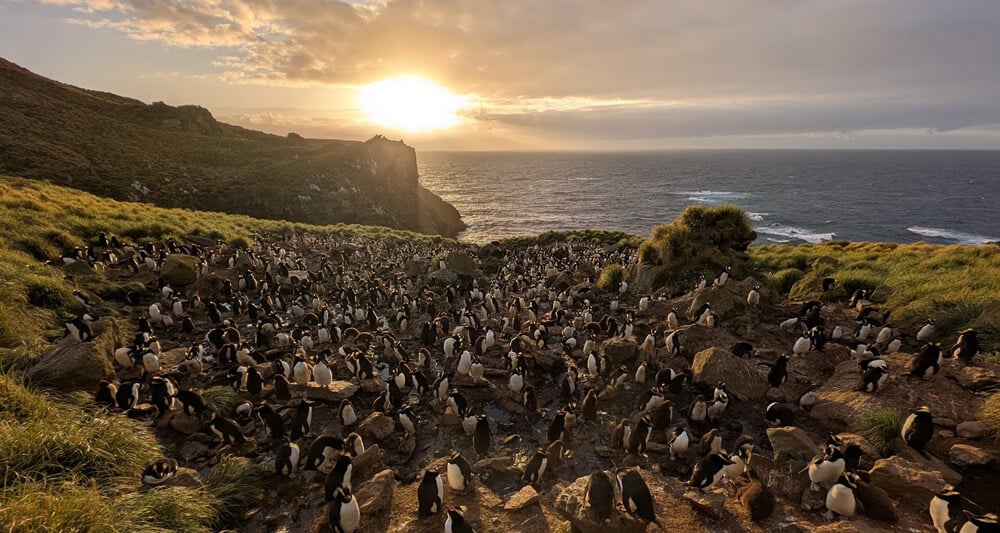
The Tawaki Project is a New Zealand-based conservation initiative focused on New Zealandโ€™s crested penguins – among the most endangered and least studied seabirds in the world. Since 2022, the project has conducted a series of expeditions to gather baseline information on the Erect-crested and the Eastern Rockhopper penguins, Both species breed on remote subantarctic islands south of New Zealand.

Through annual research expeditions, the project studies penguin populations, breeding success, migration, and feeding behaviour using modern tools such as drones, GPS trackers, and satellite tags. The goal is to better understand why these species are declining and to provide the scientific knowledge needed to support their long-term conservation.

Program Partners

  • Global Penguin Society
  • Antarctic Research Trust

Location

Expected Time Frame

Duration of Expedition

  • 16-18 Days Early January, 14-21 Days Late March

Accommodation Needed

  • 4 people

Special Equipment Needed

  • Rugged tender or smaller vessel required for shore party landings on exposed rocky coastlines.

Expedition parameters listed above are flexible and negotiable.

log0301 (1)

Background:

Despite the Erect-crested penguin being listed as โ€˜Endangeredโ€™ and the Eastern Rockhopper penguin as โ€˜Vulnerableโ€™ by the IUCN red list, both species have historically received very little scientific attention. Until recently, reliable population data were virtually non-existent, with the most recent systematic surveys dating back to the mid-1990s – making it extremely difficult to understand how populations were changing over time.

The Tawaki Project has helped replace outdated estimates with accurate drone-based surveys, revealing major differences between island populations. For example, Erect-crested Penguin numbers on the Antipodes Islands have declined by more than 40% since the 1990s, while populations on the Bounty Islands have remained comparatively stable.
The project has also begun identifying important feeding areas at sea and monitoring emerging threats such as Highly Pathogenic Avian Influenza (HPAI), which poses a serious risk to seabird populations worldwide.

Mission:

The Tawaki Projectโ€™s mission is to fill critical knowledge gaps that currently limit conservation efforts for New Zealand’s crested penguins – acting as a de facto custodian of species that, despite their threatened status, fall beyond the practical reach of regular government monitoring given the remoteness and logistical demands of their subantarctic habitat. By conducting annual expeditions and long-term monitoring, the project aims to better understand population trends, breeding success, migration patterns, and emerging threats. The research is designed to directly support evidence-based conservation action for these penguins and their habitats.

The summer 2026/27 trip marks the final expedition of the project’s initial five-year programme – not by design, but because funding has run its course. With vessel access being the single largest logistical barrier to continuing this work, bridging this gap allows the Tawaki Project to maintain its unique monitoring role across New Zealand’s subantarctic islands into the future.

Applications:

Each expedition gathers information on penguin population size, breeding success, migration routes, and feeding behaviour. Researchers also collect biological samples for genetic, dietary, and disease studies, helping build a clearer understanding of how these species respond to environmental change and other pressures.

The project also contributes valuable information about the wider subantarctic ecosystem through surveys of other wildlife species, including seabirds and seals. The findings from the Tawaki Project contribute directly to conservation planning, biodiversity reporting, and future marine management decisions, particularly around important feeding areas in the Southern Ocean.

The project also supports education and scientific training by involving university students and early-career researchers in hands-on fieldwork and collaborative research opportunities.

Beyond academia, the Tawaki Project follows an open science approach aimed at bringing the realities of subantarctic wildlife to the public. This includes facilitating documentary film productions – most notably contributing to Netflix’s “Our Planet II” – as well as developing live-stream systems such as TawakiCam, which give audiences around the world a real-time window into penguin behaviour in some of New Zealand’s most remote and rarely visited places.

Get Involved

If youโ€™re interested in learning more about this specific program opportunity, please reach out to our team below to find out more about this program or get involved in other opportunities with SeaKeepers.

Explore More Opportunities

img at sea opportunities

At-Sea Opportunities

Browse other research opportunities around the world to support oceanographic research through our other branches of programming.
img citizen science opportunities

Citizen Science Opportunities

Browse other citizen science opportunities around the world to support scientists in their research.
img education opportunities

Education Opportunities

Browse education opportunities in South Florida, the United Kingdom and the South Pacific to support educational outreach for students.
img community opportunities

Community Opportunities

Browse community engagement opportunities in South Florida, the United Kingdom and the South Pacific to support local social responsibility and policy change.

img get involved form

Get Involved

To discover more about this program and contribute to the crucial work of ocean conservation and scientific research, please fill out the form below and a member of our programming team will reach out to you with more details.

"*" indicates required fields

This field is for validation purposes and should be left unchanged.