- SeaKeepers' Vessel DISCOVERY II
FMP Manta Ray and Guitarfish Acoustic Receiver Retrieval
- November 19, 2025
- Fort Lauderdale, Florida

Project Overview
Despite being large and charismatic megafauna, manta rays remained largely overlooked and understudied in Florida for many years. Established in 2016, the Florida Manta Project became the first research initiative dedicated specifically to Florida’s manta ray populations. Florida is unique in hosting both a rare manta ray nursery habitat and a large seasonal aggregation of adults.
Their pioneering work seeks to close critical knowledge gaps in manta ray biology, provide essential data to management agencies, identify key habitats, and advance conservation and public awareness. In 2025, the manta rays off Florida were formally described as a new species — the Atlantic Manta Ray, Mobula yarae. Yet even with this exciting discovery, much remains to be learned about the species’ ecology and life history.
Application
The Florida Manta Project (FMP), a program of the Marine Megafauna Foundation, has led research on manta rays and guitarfish in the eastern United States. Our pioneering work aims to fill critical knowledge gaps in manta ray life history, provide essential data to government agencies, identify key habitats, and advance conservation and public awareness. To study these endangered rays, the FMP team employs a range of scientific and outreach methods, including photo identification of individual manta rays and guitarfish, satellite and acoustic telemetry, genetic sampling to assess population structure, and documentation of threats such as boat strikes and fishing gear entanglement. We also engage local communities by delivering educational lesson plans in schools and raising public awareness about manta rays and the challenges they face.
Expedition Summary
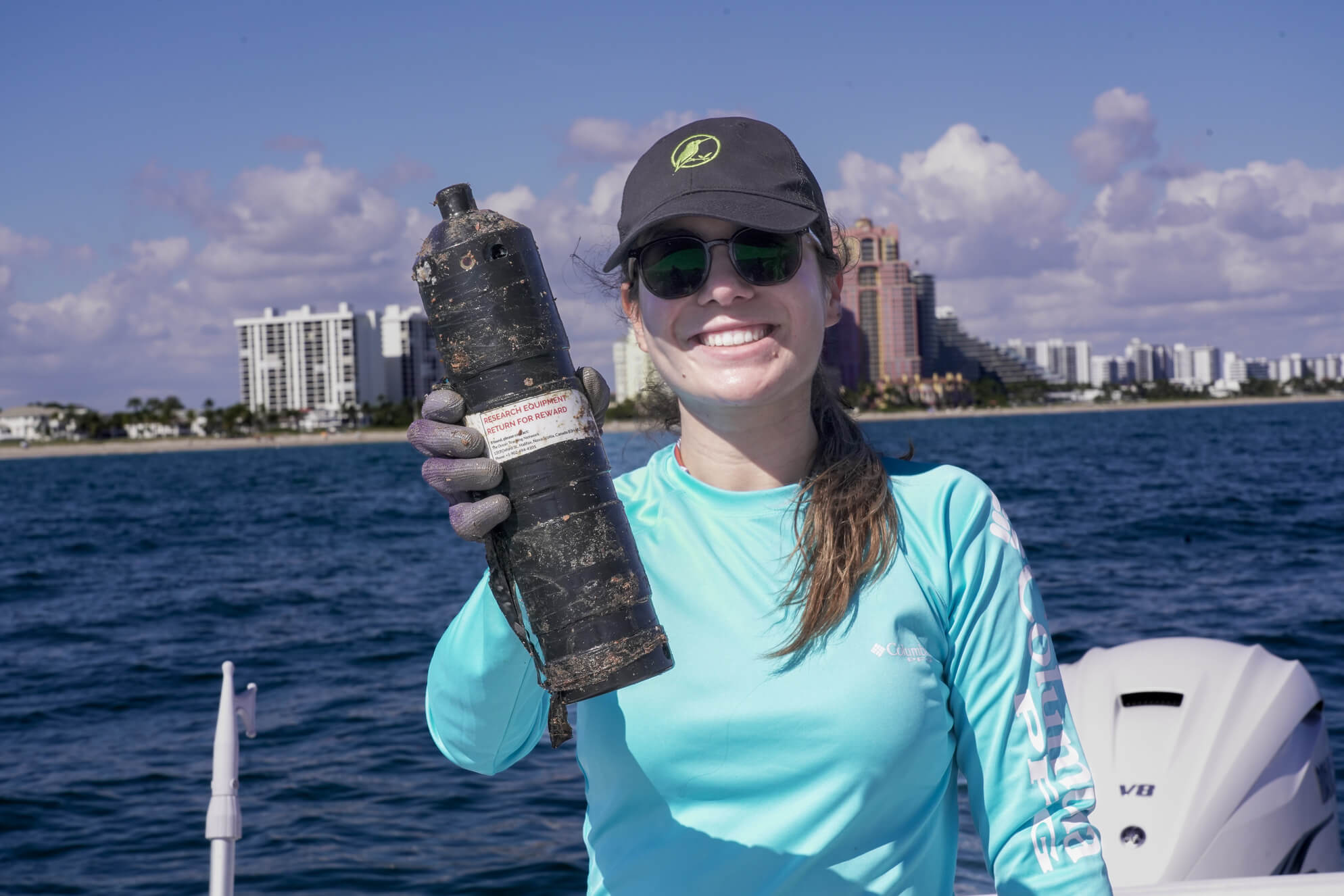
On November 19, 2025, The International SeaKeepers Society assisted the Florida Manta Project to conduct a dedicated field expedition to service and retrieve acoustic telemetry receivers positioned along the coastline from Fort Lauderdale to Miami. These receivers are part of a long-term monitoring array designed to detect tagged manta rays and guitarfish as they move through South Florida’s coastal waters.
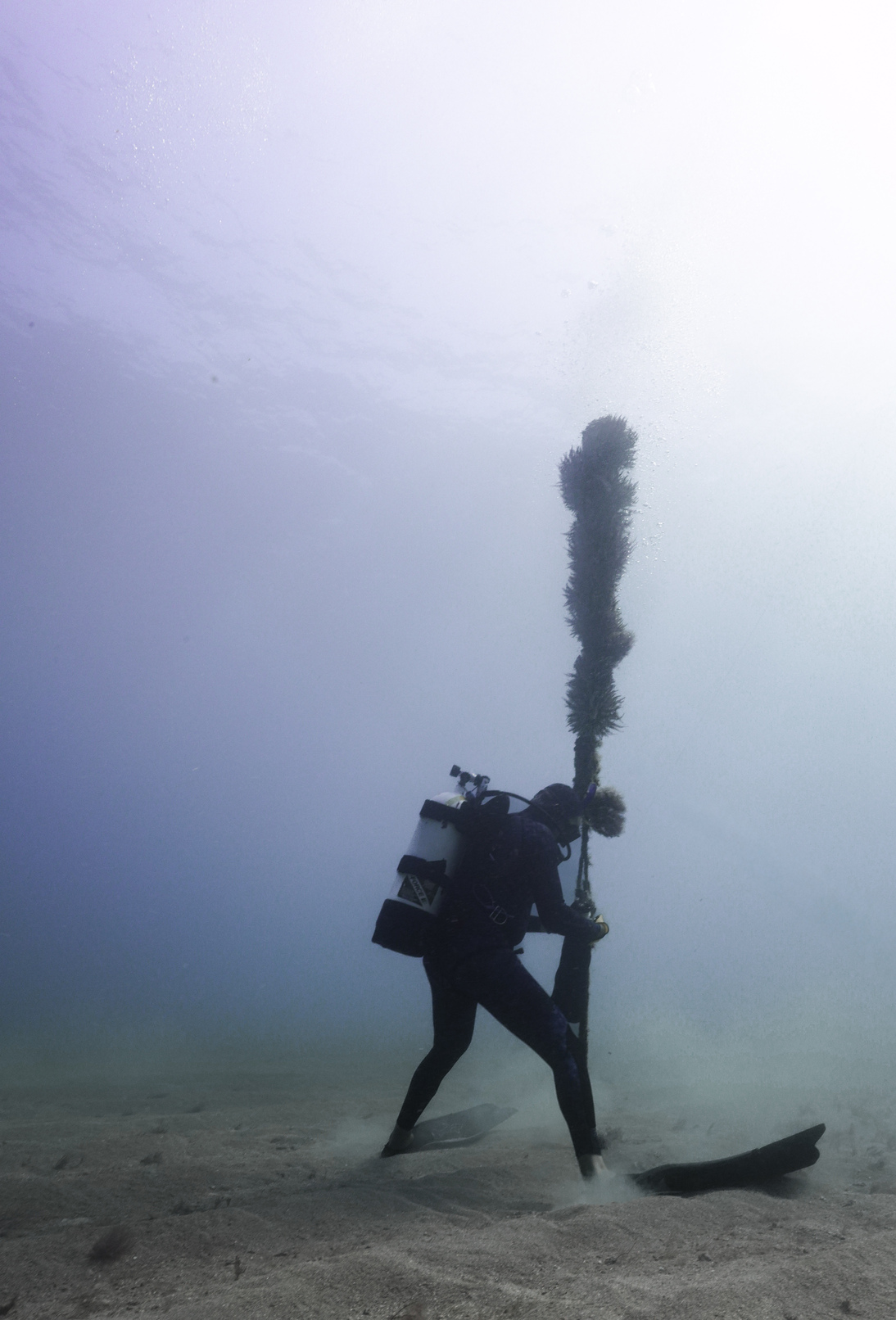
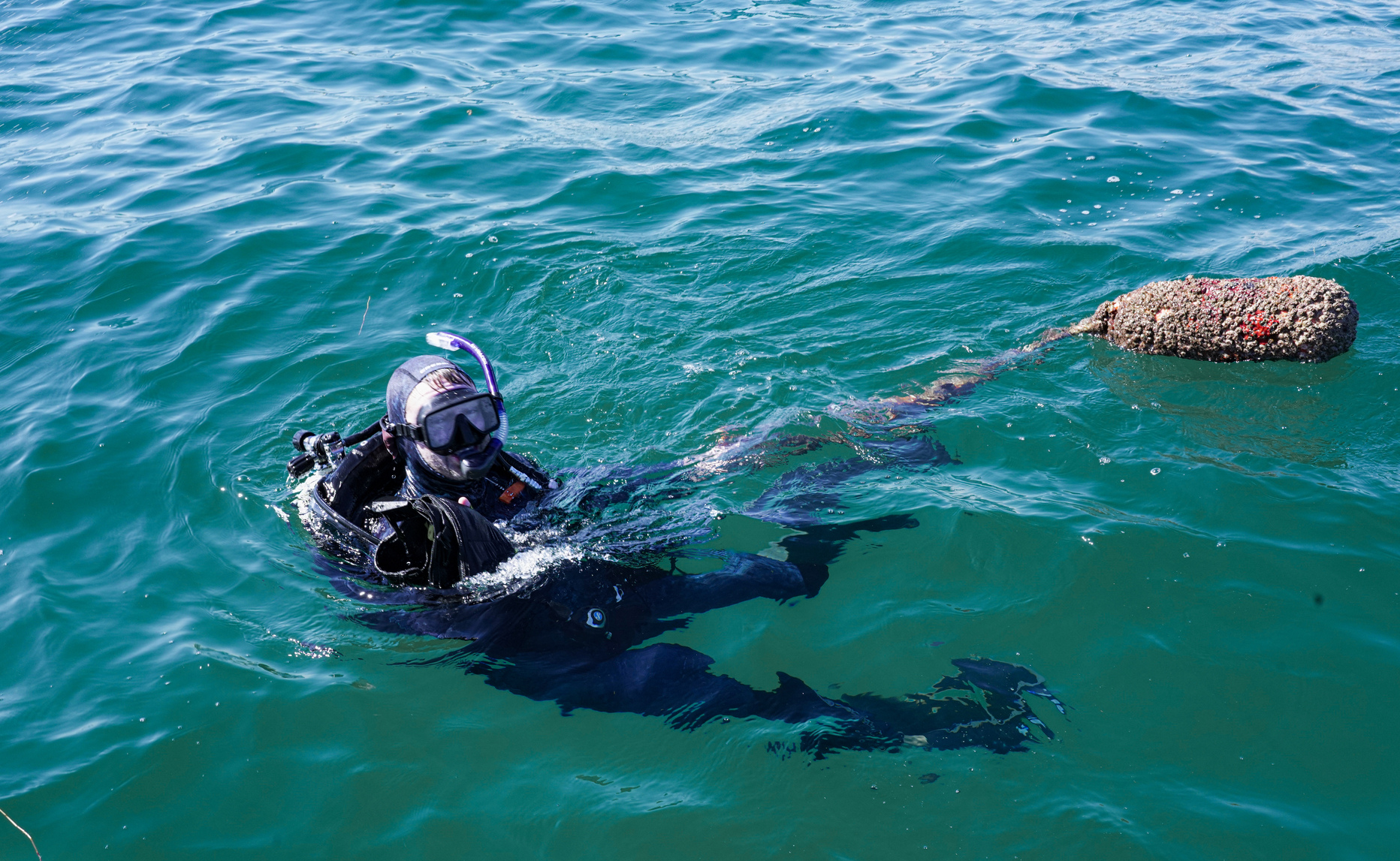
Over the course of the expedition, the FMP team located and retrieved multiple receivers, conducting repeated dives and vessel operations to safely bring each unit onboard. Once recovered, every receiver was thoroughly cleaned, inspected, and connected to their data-logging system, allowing them to download months of acoustic detections. These data reveal how many manta rays passed through the region, when they were present, and how they used this highly urbanized stretch of coastline.
After data retrieval, all receivers were serviced and redeployed at their original stations to continue collecting information. This careful process ensures minimal gaps in monitoring and maintains the integrity of our long-term dataset.
The information recovered during this expedition provides essential insights into the movement patterns, habitat use, and residency of manta rays in South Florida—knowledge that directly informs conservation planning, critical habitat identification, and management decisions for this endangered species.
Location
Fort Lauderdale, Florida
Duration of Project
This project has been ongoing since 2016.
Leadership
Research Team
Jessica Pate, Research Scientist, Florida Manta Project
Bryant Turffs, Research Assistant and Underwater Photographer, Florida Manta Project
Isabel Moyer, Research Assistant, Florida Manta Project
Aubri Keith, Captain, The International SeaKeepers Society
Rosie Moore, Underwater Photographer, The International SeaKeepers Society
Partner Sites

Photo Gallery