
- SeaKeepers' Vessel DISCOVERY II
Permit Spawning Aggregation Dynamics and Predator Ecology
- April 28 - May 6, 2026
- Key West, Florida
Project Overview
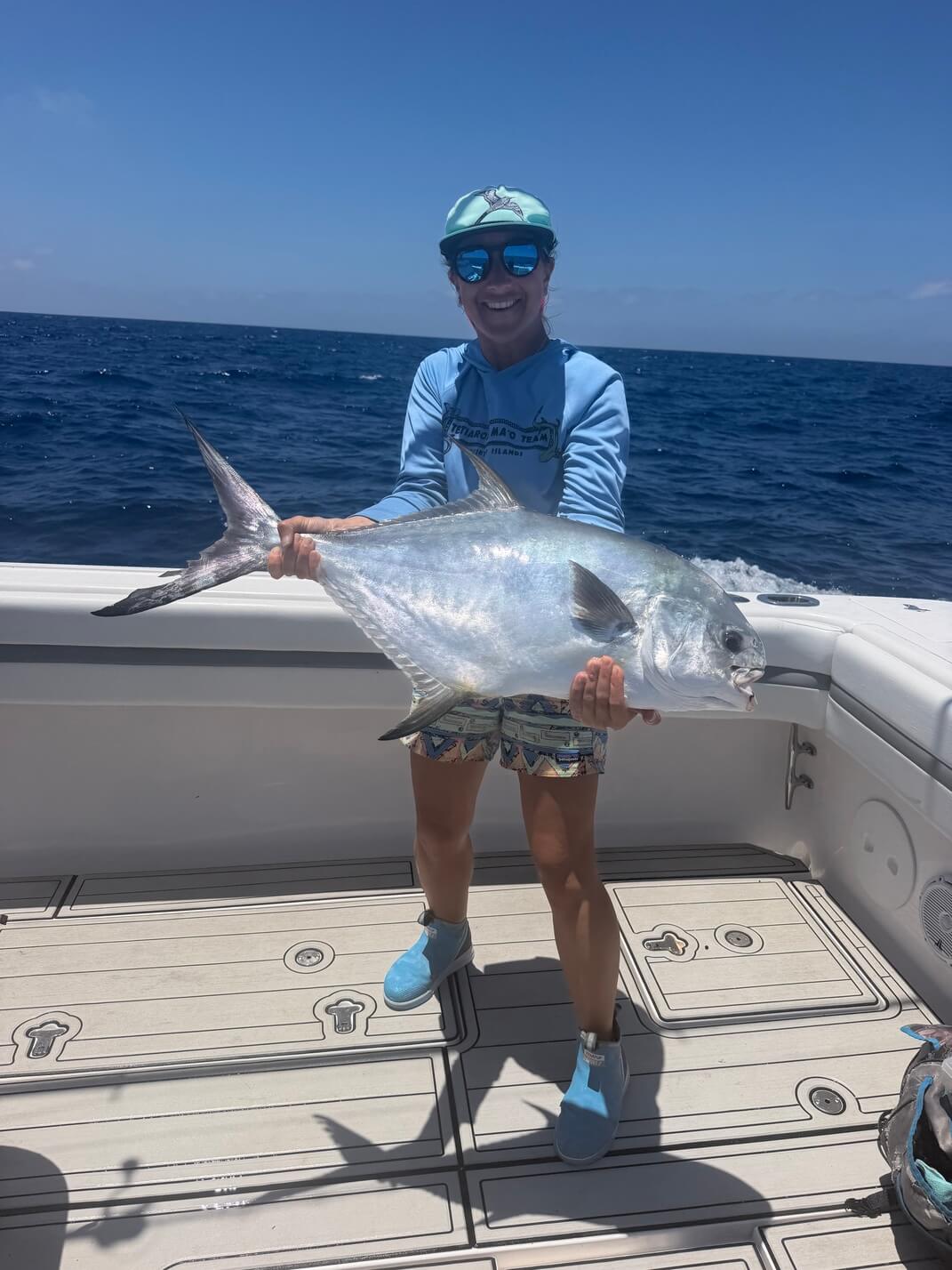
Permit (Trachinotus falcatus) are a popular sportfish species that form seasonal spawning aggregations on natural and artificial reefs throughout the Florida Keys from March through June. While harvest is prohibited from April 1 to July 31 in the region, catch-and-release angling during this time remains common. However, concerns have emerged regarding the sustainability of this practice due to high rates of depredation—when hooked fish are intercepted by predators before release. In response, the Florida Fish and Wildlife Conservation Commission implemented a seasonal fishing closure at Western Dry Rocks (WDR), a site known for elevated depredation mortality.
To better understand the implications of angling pressure and predator presence during the spawning season, researchers from Florida International University and Carleton University are conducting an ongoing study to evaluate the ecology of permit aggregations and predator foraging behavior. This research supports data-driven management efforts and contributes to a broader understanding of fish population dynamics and predator-prey interactions in the region.
This expedition forms one component of that long-term study, employing a combination of video surveys, hook-and-line sampling, acoustic telemetry, and genetic analysis to investigate spawning behaviors, diet, movement patterns, and predator overlap.
Application
The data collected on this trip will be used to assess seasonal and annual variation in permit school size and distribution as well as shark abundance and diversity at prominent spawning aggregations in the Florida Keys.
Expedition Summary
From Apr 28 – May 6, 2026, The International SeaKeepers Society assisted researchers from Florida International University and Carleton University in conducting research on permit (Trachinotus falcatus) spawning aggregations and associated predators in the Lower and Middle Florida Keys. Permit aggregate on natural and artificial reefs in the Keys surrounding the full moons in the spring. Catch-and-release angling for permit during their spawning season has become a popular sport fishery for many anglers. Although catch-and-release angling is not inherently detrimental to the fishery since permit harvest is prohibited between April 1 and July 31 throughout the Special Permit Zone (myfwc.com/fishing/saltwater/recreational/permit/), depredation (i.e., the removal of hooked fish by a predator) has produced a high level of concern regarding the sustainability of this practice. As a result, Florida Fish and Wildlife Conservation Commission implemented a seasonal fishing closure from April 1-July 31 each year at Western Dry Rocks (WDR), where depredation mortality has been historically high, to protect permit and other species that aggregate here.
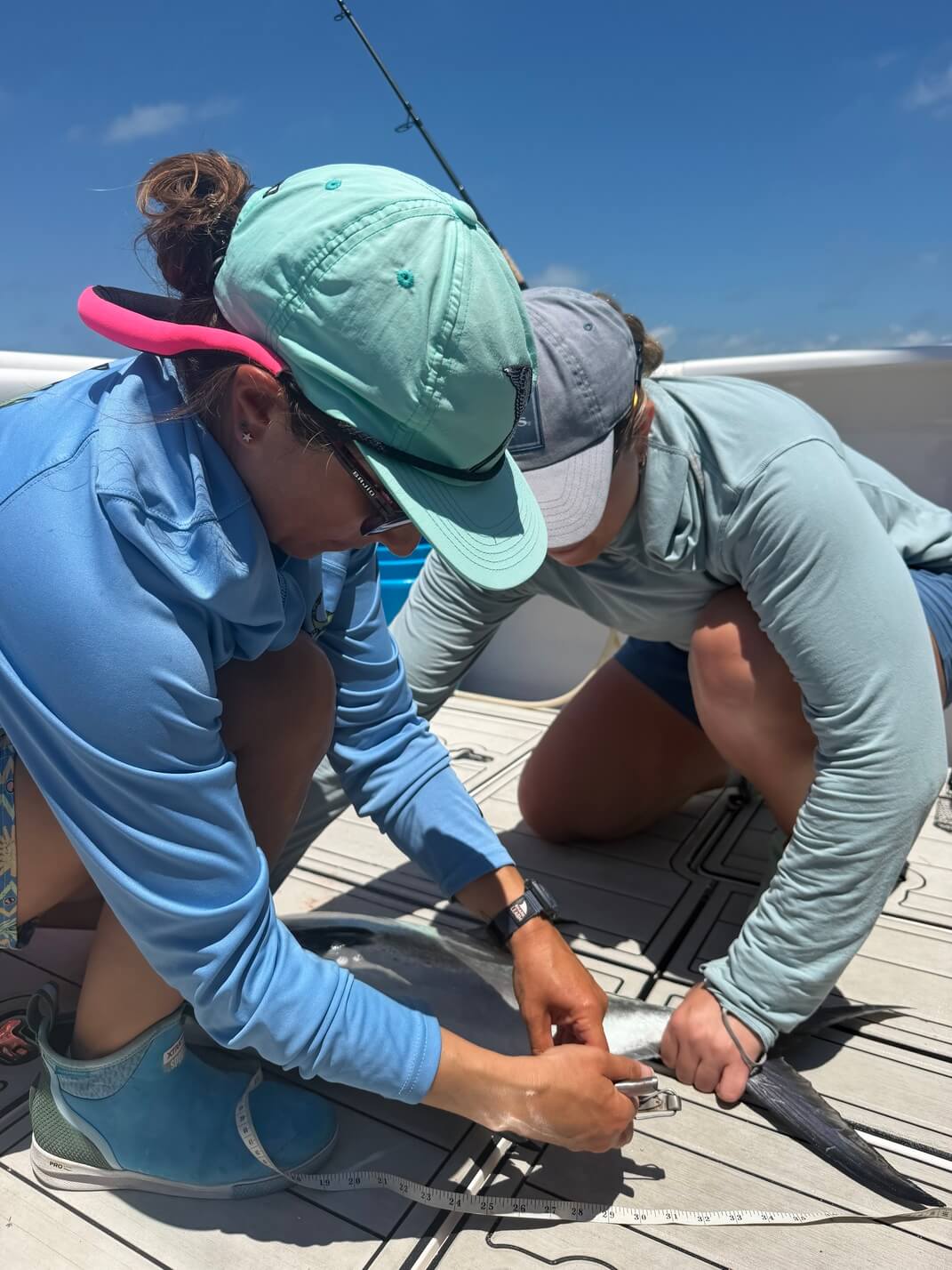
The objectives of this expedition were to quantify the 1) relative abundance and 2) size structure of permit at spawning aggregations in the Florida Keys. Remote underwater video and 360° camera surveys were conducted to gather data on permit and potential predators (i.e., shark species composition, abundance, behavior), which were complemented by permit fork length measurements. These data will be used to assess changes in permit aggregation dynamics and demographics in response to the fishing closure, given our continued research on these aggregations since before the closure went into effect.
Some highlights from data collected on this trip:
• Initial results from the video surveys suggest that permit abundance is high (>1,500 individuals) at the Lower Keys aggregation site, which is comparable to previous seasons. Other schools of aggregating species were also observed, including horse-eye and crevalle jacks.
• The range (55-88 cm fork length) and average size of permit (71 cm fork length) were larger than previous survey years, indicating an increase in the abundance of large, fecund individuals as well as new recruits within the spawning aggregation.
• We observed a previously acoustically tagged Caribbean reef shark (Carcharhinus perezi) and several untagged individuals at the Lower Keys aggregation site. Several other species, including blacktip (Carcharhinus limbatus), great hammerhead (Sphyrna mokarran) and bull (Carcharhinus leucas) sharks, were observed near aggregations at Lower and Middle Keys sites.
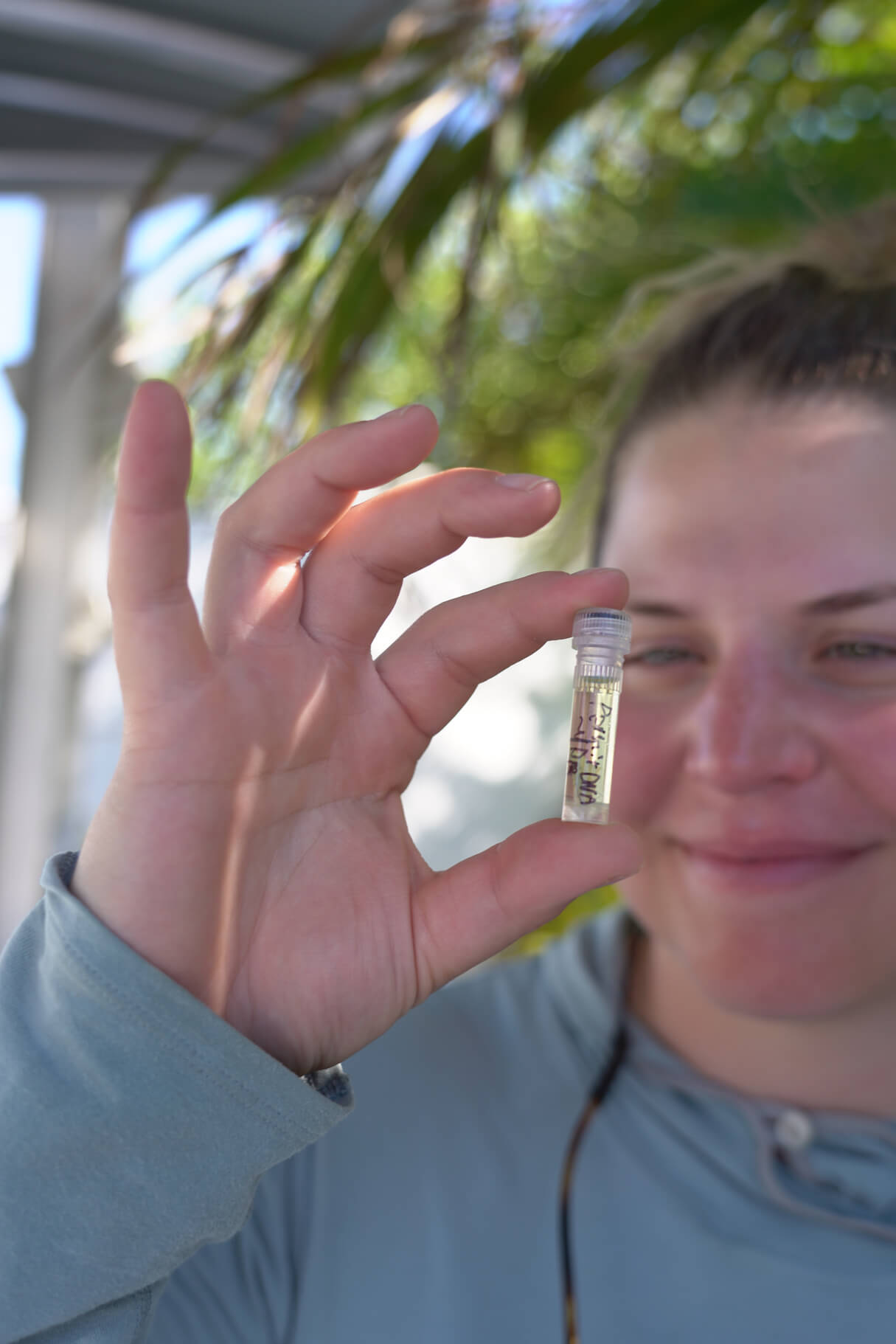
• We conducted exploratory video and environmental DNA surveys at several artificial reefs in the Gulf, which will assess habitat-use and colonization rates across recreationally important species (i.e., snappers, jacks, groupers, sharks).
Location
Florida Keys
Duration of Project
Ongoing since 2018.
Research Team
Kirk Gastrich – Florida International University
Gina Clementi – Florida International University
Mike Heithaus – Florida International University
Kevin Boswell – Florida International University
Andrew Natter – Florida International University
Mason Sanford – Florida International University
Jessica Robichaud – Carleton University
Capt. Till Koerber – The International SeaKeepers Society
Rosie Moore – The International SeaKeepers Society





Photo Gallery