
- DISCOVERY Partners Seas Your Dreams & Mangrove Marina
Tracking Sharks Across the Greater Everglades
- October 14 - 18, 2026
- Tavernier, Florida
Project Overview
Everglades National Park protects one of the largest and most ecologically important estuarine landscapes in the United States. Its shallow bays, shorelines, and channels provide essential feeding, nursery, and movement habitats for a diverse community of sharks and rays. However, these habitats are undergoing significant change as Everglades restoration alters freshwater delivery to Florida Bay and climate change, warming waters, shifting salinity patterns, and other environmental pressures continue to reshape the ecosystem.
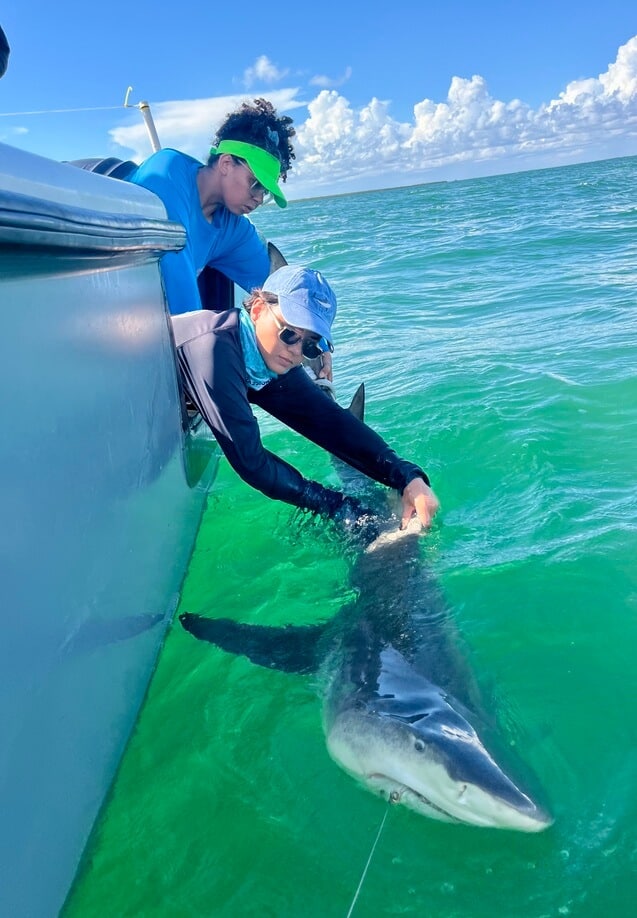
Researchers from the University of Miami are investigating shark movement and habitat use within Everglades National Park and the surrounding waters of the Greater Everglades, with a primary focus on juvenile and subadult tiger sharks (Galeocerdo cuvier). Although young tiger sharks regularly use Florida Bay, comparatively little is known about how they move through its remote basins and channels or how their habitat use responds to changing environmental conditions.
Using standardized shark surveys, satellite and acoustic telemetry, and biological sampling, the research team aims to identify important juvenile habitats, areas of repeated use, and movement corridors connecting Everglades National Park with surrounding South Florida waters.
Application
Satellite telemetry is particularly valuable in Florida Bay because much of the region has limited coverage through existing acoustic receiver arrays. Satellite tags allow researchers to follow sharks through remote portions of the ecosystem that would otherwise be difficult to monitor.
Movement data collected through this project will be evaluated alongside environmental variables such as salinity, water temperature, freshwater influence, seagrass distribution, and other habitat characteristics. This will help researchers better understand the factors influencing shark distribution and evaluate how changes associated with Everglades restoration and climate change may affect the ecological function of Florida Bay as juvenile shark habitat.
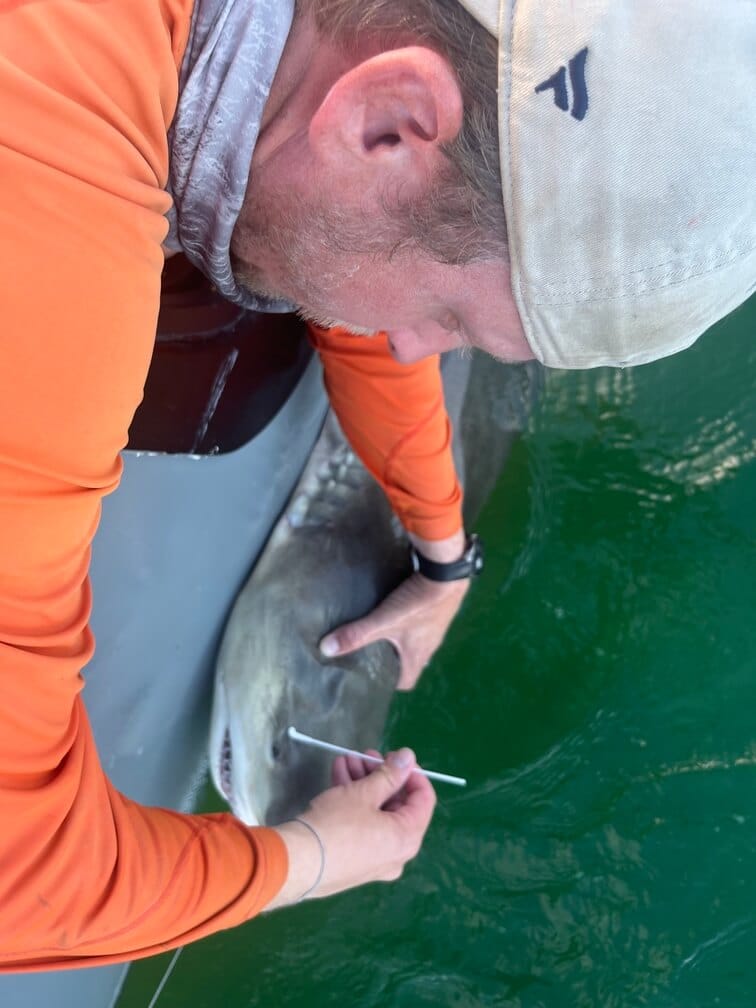
Each captured shark also undergoes a standardized biological workup. Samples collected during these procedures can support research into shark health, physiological condition, parasite communities, diet, and resource use across different regions of the Greater Everglades. The resulting data can contribute to long-term conservation, habitat protection, species assessments, and restoration planning throughout South Florida.
Expedition Summary
From October 14 – 18, 2026, The International SeaKeepers Society supported the University of Miami’s Shark Research & Conservation Program to conduct shark surveys in Florida Bay and Everglades National Park. Because the fieldwork took place away from the team’s home port, researchers needed a secure base for their vessel and nearby accommodations throughout the expedition.
The team supplied and operated a University of Miami research vessel, while SeaKeepers coordinated shoreside support through Mangrove Marina and Seas Your Dreams. Together, these partners generously provided complimentary dockage for the research vessel and houseboat accommodations at the marina, allowing the researchers to remain close to their vessel, equipment, and field sites throughout the five-day expedition.
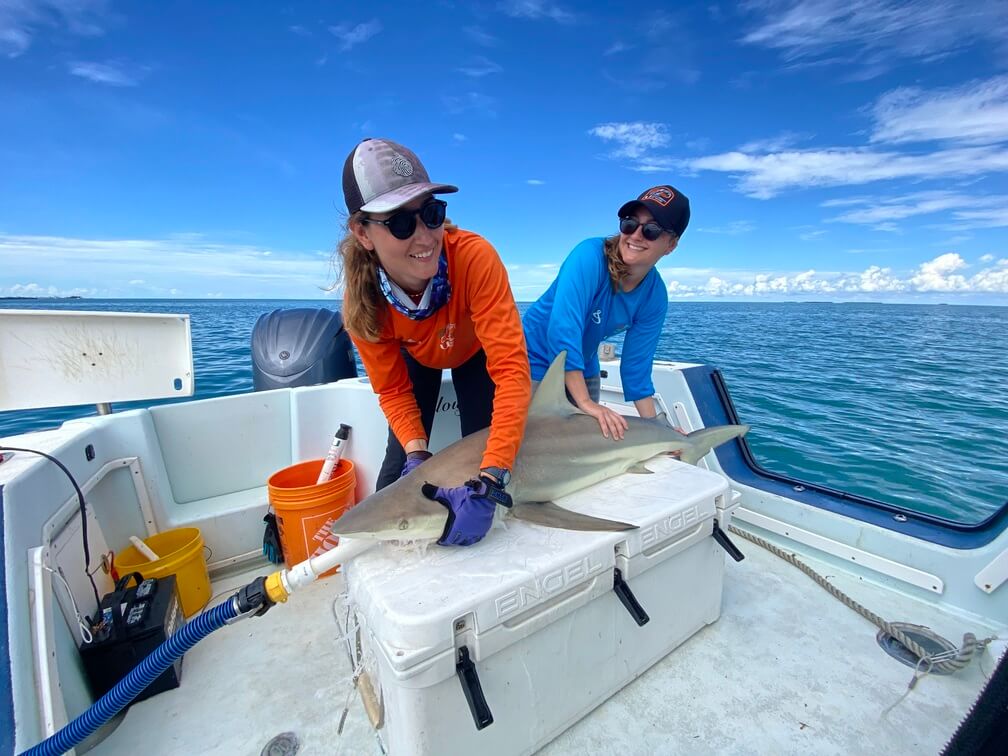
During the fieldwork, the team completed seven full days of shark research, with one team operating in the evening and one in the morning, encountering 27 sharks representing six species! These included 11 nurse sharks, 4 blacknose sharks, 3 lemon sharks, 3 blacktip sharks, 2 bonnethead sharks, 1 bull shark, and 1 tiger shark. The team also encountered one grouper. Notably, one blacktip shark was fitted with a satellite tag to support ongoing movement ecology research. A total of 19 University of Miami graduate and undergraduate students participated in the fieldwork, gaining hands-on experience with shark research and field sampling techniques. Although no juvenile tiger sharks were encountered during this expedition, the team is confident that future fieldwork will help secure tag deployments for smaller tigers. The team is particularly excited about the biological samples collected during this expedition, which will allow us to compare sharks sampled in Florida Bay and the Upper Keys with individuals previously sampled in Biscayne Bay, providing valuable insight into potential differences in shark populations and habitat use across these regions.
The telemetry and biological data collected during this expedition will contribute to SRC’s broader effort to understand how juvenile sharks use Florida Bay and how environmental conditions influence their movements. Data from tagged animals will continue to be collected and analyzed as the sharks move throughout the Greater Everglades and surrounding South Florida waters.
This expedition demonstrates how SeaKeepers’ network can support marine research beyond the direct use of a DISCOVERY Yacht. By connecting the research team with organizations able to provide essential dockage and accommodations, SeaKeepers helped SRC overcome logistical barriers and enabled more time and resources to be directed toward field research.
Location
Everglades National Park, Florida
Duration of Project
This study on shark movement and habitat use is part of an ongoing research project that began in 2016 and recently contributed to the identification of Biscayne Bay as an Important Shark and Ray Area (ISRA). Building on this work, we are excited to expand our regular sampling into Florida Bay and the Upper Florida Keys to better understand shark movement, habitat use, and connectivity across South Florida. During this expedition, we conducted shark surveys within Everglades National Park and the Florida Keys National Marine Sanctuary, focusing on areas along the borders of Everglades National Park. Expanding our sampling efforts into these regions will help us better understand how sharks use habitats across this interconnected coastal ecosystem.
Research Team
- Julia Saltzman, PhD Student, Shark Research and Conservation Program
- Candy Real, PhD Student, Shark Research and Conservation Program
- Delaney Reynolds, PhD Student, Shark Research and Conservation Program
- Emily Yeager, PhD Candidate, Shark Research and Conservation Program
- Karizma Acosta, PhD Student, Shark Research and Conservation Program
- Jake Jerome, Staff, Shark Research and Conservation Program
- Christian Pankow, Staff, Shark Research and Conservation Program
- Emma DeLillo, Staff, Shark Research and Conservation Program
- Nick Perni, Staff, Shark Research and Conservation Program

Photo Gallery